
Tag Archives: e liquid manufacture

Standing Out from the Crowd in the 2023 Vaping Industry

In the vaping industry, product descriptions play a crucial role in helping E-Liquid brands stand out from the crowd. With so many E-Liquids available online, it can be difficult for a brand to differentiate itself and attract customers. However, by crafting effective product descriptions, E-Liquid brands can set themselves apart and increase their chances of success.

Creating a voice for your E-Liquid brand

Building a brand voice for an E-Liquid brand can help to establish a unique identity and differentiate the brand from its competitors. Here are some steps to help build brand voice:

  1. Define your brand's personality: Determine the personality of your brand, such as whether it is fun and playful, sophisticated and luxury, or serious and professional. This will serve as a foundation for all your messaging and content.
  2. Develop a tone of voice: Based on your brand's personality, develop a tone of voice that will be consistent across all your content, including product descriptions, social media posts, and other marketing materials.
  3. Use storytelling: Use storytelling to convey the brand's message and values. Share the story of how the brand started, its mission, and the unique features and benefits of the E-Liquids.
  4. Be consistent: Consistency is key when building brand voice. Make sure that all your content, whether it's a product description, social media post, or email newsletter, uses the same tone of voice and messaging.
  5. Use imagery: Use imagery that aligns with the brand's personality and messaging. For example, if your brand is fun and playful, use bright colours and playful imagery in your marketing materials.
  6. Engage with customers: Engage with customers on social media and other platforms to build a relationship and create a sense of community. This can help to build trust and loyalty.
  7. Keep the brand voice in mind: Always keep the brand voice in mind when creating content and make sure that it aligns with the brand's personality and messaging.

By following these steps, an E-Liquid brand can establish a unique and consistent brand voice that will help to differentiate it from its competitors and attract customers.

Give your products a voice and make them tell a story

One way to make your E-Liquid and vape product descriptions stand out is by highlighting the unique flavours and ingredients used in your products. For example, instead of simply listing the flavours in your E-Liquid, describe the taste experience and the specific flavours used to create that product. This not only helps customers understand what they can expect but also sets your E-Liquid apart from others that may use generic or similar flavours.

Specifics pave the way to understanding

Another way to make your product descriptions stand out is by emphasizing the quality of your E-Liquids. Many customers are wary of cheap, low-quality E-Liquids, so highlighting the use of high-quality ingredients and manufacturing processes can help to build trust and credibility with potential customers.

In addition, providing detailed information about the nicotine strength and VG/PG ratio of your E-Liquids can be helpful for customers looking for specific vaping experiences.

You can also include customer reviews and testimonials in your product descriptions. This can be a powerful way to build trust and credibility with potential customers.

Finishing touches

Finally, it's important to keep your product descriptions up-to-date. With new flavours, ingredients, and trends constantly emerging in the vaping industry, it's important to regularly review and update your product descriptions to ensure that they are accurate and relevant.

In summary, to make your e-liquid product descriptions stand out from the crowd, focus on highlighting the unique flavours and ingredients used in your e-liquids, emphasizing the quality of your e-liquids, providing detailed information about nicotine strength and VG/PG ratio, including customer reviews and testimonials, using high-quality images and videos, and keeping your product descriptions up-to-date. By following these tips, E-Liquid brands can effectively differentiate themselves and attract customers in the competitive vaping industry.


Australia Considers Toughening Restrictions on Vaping

Despite being the home of one of the world’s toughest restrictions on vaping, the Australian government are considering further tightening. The aim is to crackdown on children accessing E-Cigarettes. But is it creating more harm than good?

The current vaping regulations in Australia

Currently, it is illegal to purchase nicotine-containing E-Liquid, and devices in Australia without a prescription. Each state however regulates issues such as sales, public use, age limits etc.

All states require retailers to be given approval for selling E-Liquid but at this time, none have been granted approval. Similarly, many states allow the sale of nicotine-free E-Cigarettes, but the products cannot claim to help quit or reduce smoking. These include Australian Capital Territory (retailers must have a tobacco license) and Tasmania, Queensland, Victoria and New South Wales have the same rule but sellers don’t require a license.

The proposed changes

The Australian federal government are considering key changes targeting specific areas such as importation rules and tougher labelling laws. A public consultation will be held to cover the four areas:

  • Changes to importation and border control laws required to stop illegal products entering Australia
  • Pre-market assessments of vapes to create a regulated source of products for pharmacists and doctors to prescribe
  • Labelling, advertising and flavouring of vapes that make them attractive to children
  • Stronger identification and regulation of nicotine-containing products

While these are being debated, the health Minister Mark Butler, has announced a ban on menthol cigarettes and other cigarette flavours plus additives.

The public consultation on vaping reforms will be open until the 16th of January.

The AMA (Australian Medical Association) has welcomed the federal government’s plans to tighten tobacco control and calls for the below changes to be made:

  • reducing the concentration limit from 100mg/ml to 20mg/ml, and introducing limits on the flavours and volume of nicotine that can be prescribed or ordered,
  • banning the importation of nicotine vaping products through the Personal Importation Scheme,
  • adding Nicotine Vaping Products to Real Time Prescription Monitoring programs,
  • restricting the use of Medicare smoking cessation items to a patient’s usual doctor, consistent with previous advice provided by the AMA.

Have these regulations really helped?

There’s much to debate with Australia’s already tight regulations on vaping. They clearly haven’t had the impact the government wished as they feel the need to tighten them further. And research has suggested that these changes may have been more detrimental to the smoke-free objective.

A recent study published by the BMJ (British Medical Association) analysed the smoking rates and cigarette consumption in 6 jurisdictions, across different regulatory environments for vaping. These included Alberta, Ontario, Quebec and British Colombia, UK and Australia. It was noted that, unsurprisingly, Australia had lower rates of vaping and a much lower rate of declining smoking rates, in comparison to the other countries.

And other countries are taking note of the failings. CAPHRA (Coalition of Asia Pacific Tobacco Harm Reduction Advocate) have submitted a consultation document to Australia’s Therapeutic Goods Administration (TGA). They believe that Australia’s method of medicalising vaping is failing and that there needs to be open access for smokers looking to quit smoking.

Keep posted on the latest news with Xyfil.

China’s Latest Regulation Changes Include Vaping Tax

New legislation in China has taken effect as of the 1st of November, which continues to change the landscape of the Chinese vaping industry. Last year changes were made that established a need for Chinese E-Cigarette companies, to obtain a license to be able to continue selling to customers.

Along with this change, the requirements and regulations that were introduced triggered a wave of closures, especially in hardware manufacturing. And these new changes could bring even more issues for Chinese vapers and manufacturers.

The new vaping tax implemented in China

On the 1st of November, the Chinese government implemented a new tax on vaping products. This consumption tax includes a 36% tax on the production or import of E-Cigarettes and an 11% tax on wholesale distribution in China. China’s Ministry of Finance has announced that E-Cigarette products will now be a sub-item under the tobacco tax item list.

Companies that have a license from the tobacco monopoly authorities (STMA) to produce E-Liquids, or companies that have obtained/licensed the use of a registered trademark or another company’s E-Cigarette products, will have their consumption tax calculated differently depending on how the products are sold or produced. Similarly, for E-Cigarettes made through an OEM, it is down the company that owns the trademark is liable for the consumption tax.

  • Producers and wholesalers pay tax based on the sales of the production and wholesale of E-Cigarettes. 
  • Companies that sell E-Cigarettes through an agency in the production process must pay tax based on the sales of the distributors or agents to the e-cigarette wholesaler.
  • Importers of E-Cigarettes must pay tax based on the component taxable price.
  • Companies engaged in processing E-Cigarettes in the production cycle must calculate the sales of trademarked e-cigarettes and the sales of OEM e-cigarettes separately; if they are not accounted for separately, they must pay consumption tax together.

Is there a concern about exports? A later announcement clarified that exports of E-Cigarettes are eligible for the tax refund and exemption policy. This means that although the internal Chinese vaping industry is expected to feel the pinch, exports will not see the same treatment.

What is concerning though is the potential for more Chinese E-Cigarette companies to begin struggling to keep up with the added tax. Not to mention the added cost that very likely could be transferred to consumers in China.

These changes come from China’s further clampdowns on vaping products that saw flavoured vapes banned. Having started in October, only tobacco-flavoured vapes are to be sold in China.

Are there any positives from these changes?

One thing is for sure, with the increasing legislation in China, it has begun a crackdown on requirements for E-Cigarettes and vape products in an effort to improve quality. These include regulations on the battery, ceramic coil, nicotine content, and flavours.

What these changes do help is establish a greater baseline for good quality products. Ensuring that vape products meet these criteria could help in reducing the presence of fake disposables and lower-quality E-Liquids that have begun to flood the market.

The largely untapped market of potential vapers

The Chinese vape industry has seen a similar explosion in growth as most of the world these past few years. With a smoking population of around 300 million, China is a prime spot for pushing the quit-smoking journey with the aid of vaping.

And yet the rate of E-Cigarettes usage in China is far behind other countries such as the UK and US; a mere 1.5% compared to 30%. Therefore, there is significant room for expansion but with these latest regulation changes, it may become harder to do so. Only time will tell if more high-quality vaping products will make their way into the Chinese market.

New Certification – Philippines Vaping Regulations Update

Recently, the Philippines took the vaping industry by storm with the news of its progressive vaping laws. The updated legislation helped to cement vaping as a legal smoking cessation tool and new rules are being introduced to help ensure the safety and quality of vaping products in the Philippines.

Certification for vaping products in the Philippines

The Bureau of Philippine Standards (BPS), an agency part of the Department of Trade and Industry (DTI), has recently added E-Cigarettes to the list of consumer goods subject to mandatory certification.

The recent vape law which came into effect on August 13th, 2022, regulates the importation, manufacture, sale, packaging, distribution, use, and communication of E-Cigarettes or vapes. But under the DTI Order 22-06, Series of 2022, E-Cigarettes and E-Liquids as well as HTPs will be subject to mandatory certification from January 4th, 2024.

This certification process is hoped to ensure the quality of vaping products and prevent illicit trade.

What this means for those importing to the Philippines

With these changes, it means that products covered by the BPS Mandatory Product Certification Schemes will be required to bear the Philippine Standard (PS) mark or Import Commodity Clearance (ICC) sticker. This helps to identify whether the products have been certified to conform to the necessary quality standards.

This will cover both E-Cigarette devices and E-Liquid.

Before this deadline, importers to the Philippines can voluntarily opt for a Philippine Standard mark or Import Commodity Clearance. To ensure your products meet the criteria for importing into the Philippines, you can check the DTI for more information.

How Xyfil can help with compliance

As a leading E-Liquid manufacturer in the UK, we have over ten years of experience in manufacturing and producing high-quality products around the globe. We are able to tailor products to match vaping regulations for countless countries including the UK, EU, US, and Middle East. Not only can we manufacture E-Liquid products to the specifications you require, but our in-house compliance team also excels in ensuring your products meet the requirements for where you wish to sell.

We have helped countless brands take their products to markets across the globe by offering compliance services. Not only can we make your products to spec, but run the necessary laboratory tests and process products with the necessary government agencies on your behalf.

If you would like to see how we can help you with your E-Liquid brand or create a new range, contact us today.

Avoiding Confusion with Nicotine-Free Disposables Legality

Zero-nicotine disposables are growing in popularity, but some stores are worried to stock them.

Disposable vapes are a perfect first step for many vapers as they offer a convenient and simple way to vape. Recently, some brands have branched out into developing 0mg nicotine disposables which provide all the flavour but without nicotine. But there have been reports of retailers being hesitant about stocking these sorts of devices.

Local shops refusing to stock nicotine-free disposables – why the confusion?

It seems there’s been some confusion with nicotine-free vaping products as some stores in the UK show hesitancy with stocking them. BetterRetailing reported that stores were refusing 3,500 puff nicotine-free devices with tank capacities above 2ml. Not all zero-nicotine disposable vapes offer such a high puff count, but many are beginning to do so.

So, why the confusion? By now, most are aware of what is TPD compliant (the UK regulations for vaping products). When it comes to disposable devices, we know that the E-Liquid capacity should be no more than 2ml which means they are usually capped at 600 puffs (650 at a push). And with recent store raids tackling illicit vapes that are not TPD compliant, it’s not hard to see why some stores are turning away these 0mg devices.

However, TPD guidelines are restrictions for nicotine-containing products, and thereby nicotine-free devices are exempt from these rules. Much like how shortfill E-Liquids are exempt from the restrictions which is why they can be larger than 10ml (the max capacity for nicotine-containing E-Liquids). Nicotine-free disposable vapes, if they contain no nicotine whatsoever, are legal in the UK at higher puff counts and capacity.

You can find more information on compliance with disposable devices in the UKVIA's guide.

The pros and cons of zero nicotine disposables

Nicotine-free disposables are yet another part of a vaper’s quit-smoking journey. Although they won’t help with quitting tobacco at the beginning, many vapers find that over time, they lower their nicotine strength after vaping for some time.

Since nicotine is an addictive substance that many want eventually to also quit, 0mg vapes are the perfect solution for vapers at the last leg of their quitting journey. These types of devices allow vapers to enjoy their favourite flavours and vaping experience without the addictive nicotine.

Zero-nicotine devices also allow for a smoother vape due to a lesser throat hit with the absence of nicotine.

Why retailers should consider stocking 0mg devices

As we mentioned, zero nicotine vapes are perfectly legal in the UK, including those at higher puff counts and tank capacities – so long as it is confirmed they are 0mg. No nicotine disposables offer a final stepping stone for vapers to quit nicotine whilst still enjoying their favourite brand or flavours. Vapers who already vape at low nicotine strengths can opt to use these nicotine-free devices as a means of quitting nicotine.

They are also suitable for casual smokers who may not need the nicotine hit as much as heavy smokers, but still struggle to quit because of the habits created by smoking. As vaping mimics, the motions of smoking a cigarette, these sorts of devices could be of benefit to light/casual smokers to quit cigarettes.

Vape retailers who can cater to a smoker’s quitting journey from start to finish may see greater customer loyalty and retention.

White label and OEM zero-nicotine products

Here at Xyfil we produce and manufacture a variety of E-Liquids for brands that range from our award-winning Nicotine Salts to premium Freebase Nicotine, to nicotine shots and nicotine-free E-Liquids. Our quality formulas and flavours continue to win awards across the vaping industry and with our white label manufacture, you get access to our existing, premium combinations. And even better, you can request these as 0mg to create shortfills or your own zero-nicotine disposable devices.

Or speak with us about our OEM opportunities for creating a bespoke range of no-nicotine disposables. With full flexibility throughout the entire process, we can help you go from idea to shop floor. Contact us today to start on your next range.

Vaping Confirmed At Least 95% Less Harmful Than Smoking

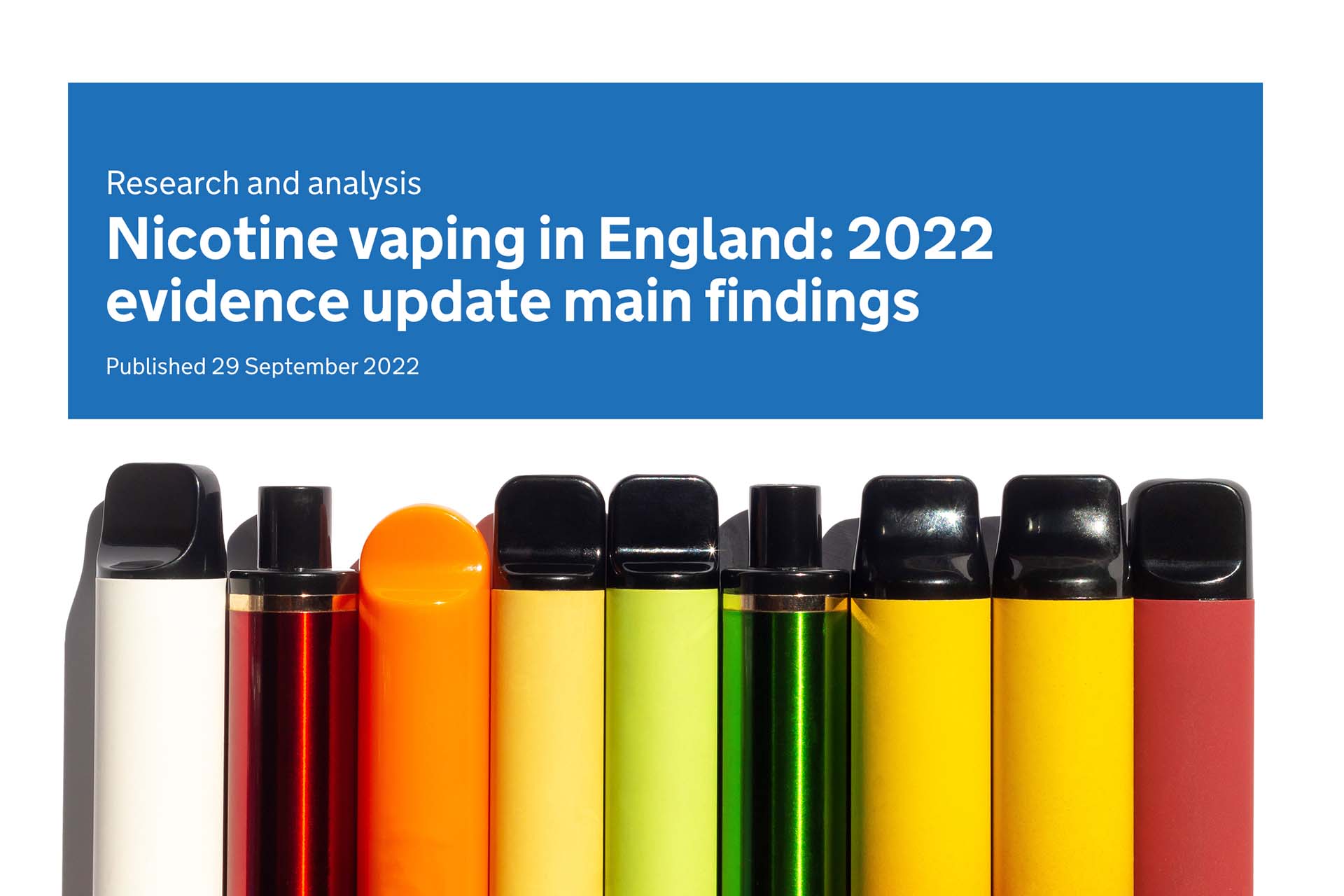
Back in 2015, it was first announced by Public Health England that their review on vaping proved it to be 95% less harmful than smoking. Since then, there have been countless studies and claims that have tried to undermine these findings. And now the Office of Health Improvement and Disparities (OHID) has released an evidence review.

Overall conclusions from Nicotine Vaping in England 2022 update

One key finding that was noted in the review, was the level of toxicant exposure in biomarkers. The evidence suggested significantly lower exposure to harmful substances from vaping compared to smoking, as shown by biomarkers associated with the risk of cancer, and respiratory and cardiovascular conditions.

Not only this but short-term second-hand exposure showed no significant increase of toxicant biomarkers among those who did not smoke/vape.

Thereby the findings confirmed that in the short and medium term, vaping poses a small fraction of the risks of smoking, but is not completely risk-free, particularly for those who have never smoked.

An important note raised in the review was a call for standardisation and consistent methodologies for future studies. Currently, many studies focus on vapers who are ex-smokers, and evidence can be interpreted without considering these implications.

Youth vaping – an issue for all involved

The review also makes a note of the prevalence of youth vaping in England. A 2022 survey from ASH-Youth on 11-18 year olds, noted that the smoking prevalence had grown from 4.1% in 2021 to 6%, a change from 6.7% in 2020.

Vaping prevalence in youth was recorded at 4% in 2021 and has since doubled to 8.6% in 2022. This included occasional and regular vaping. Importantly, the majority of young people who have never smoked also reported not vaping (98.3%).

Although the numbers are still low in comparison to other countries that have noted issues with underage vaping like the US, it is a creeping number that we should be aware of. There is much work to be done by the government, retailers and brand owners to ensure that vaping products remain out of young people’s hands.

What the vapers want

It should come as no surprise that the review noted an increase in the disposable device uses with 15.2% using them in 2022 compared to 2.2% in 2021. Despite this, tank-type vape products remained the most commonly used for those looking to stop smoking.

Flavours remained the same preference as in previous years with fruit flavours ranking the highest, followed by mint and menthol. The review did also note that there is limited evidence that some flavours have the potential to alter cellular responses (from animal and cell studies, not tested in humans), but less than what is seen with exposure to tobacco smoke.

It was also noted in the review that vaping products typically provided lower nicotine levels than that of smoking. Perhaps this may raise discussions on the topic of increasing the nicotine strength cap in the UK (which currently stands at 20mg).

The importance of knowledge and perception

The review stated that there is a strong need for inaccurate perceptions of vaping to be addressed. This is due to only 34% of adults in 2021 accurately believed vaping is less harmful than smoking. Similarly, only 11% of adults who smoked, knew that none or a small amount of the risk of smoking, was attributed to nicotine.

Clearly, there needs to be more work in raising perceptions and communicating the accuracy of information about the relative harms of vaping.

In conclusion, this new update from the government is a welcome addition to the vaping industry’s arsenal. There are still many arguments to be had with those who wish to be rid of vaping products, but this review only continues to solidify the evidence that vaping is less harmful than smoking.

Keep in the loop with Xyfil and the latest news in the vaping industry by watching out Info Hub.

How Black Friday Has Evolved in the UK – Plans for 2022

Most know Black Friday as the day of amazing sales that mark the start of Christmas shopping. But over the years Black Friday has changed and no longer is it restricted to just the US.

Originally in the US, Black Friday was named for the financial crash in 1869 but was later coined as the day after Thanksgiving. At first Black Friday held a negative connotation as it was often used to label the Friday after Thanksgiving when there were staff shortages or other issues. But it was regarded as a sales point in the 1950s when it was used to refer to an influx of shoppers the day after Thanksgiving.

Since then, it’s only given rise to the Black Friday movement as becoming a sale-orientated promotion.

Black Friday in the UK

On the flip side, in the UK, Black Friday was still used as a way for the Police and NHS to refer to the Friday before Christmas when there tends to be an influx of emergencies. So, when US-based companies like Amazon and Asda began to hold Black Friday-style promotions, there was an initial worry about the negative connotations behind the name.

It did little to dissuade customers in search of discounts however as it’s quickly grown to outpace the Boxing Day sales which predominantly in the UK, was the most profitable sales day for retail.

The evolution of Black Friday

In the retail world, Black Friday started to become a race between competitors. Who could launch their Black Friday deals first and who could offer the best deals? And as many Black Friday deals moved online with online retail booming during recent years with the pandemic, the ease of creating online promotions allowed for retailers to expand from a day of sales to a week of sales.

Now there are retailers who have Black Friday offers throughout the entire month of November. With pre-Black Friday offers and Black November offers, it’s easily become one of the biggest promotions in the UK.

Before the boom in Black Friday promotions that now can range the entire month, the start of Winter sales was the Black Friday weekend. The shift to longer promotions, it’s made the previous retail calendar somewhat obsolete. Retailers instead have noticed that customers tend to shop earlier/before the holiday season, potentially giving rise to a preference for Black Friday promotions over Boxing Day sales.

With Black Friday sales now lasting longer, retailers have also had to action plans for helping to retain shoppers’ interest. Rather than offering blanket-wide savings across their stores, intermittent offers or promoting product categories on specific days/weeks, help to keep customers interested.

How you can prepare for Black Friday 2022

Stock is going to be one of the most important things to have in mind with your promotions. The last thing you want is for your offers to run out of stock too quickly. Ordering now and getting ahead is best not only for you but for your manufacturer.

Around this time E-Liquid manufacturers will be receiving orders for Black Friday stock and to be able to meet demand, they will need to know the full extent of the demand. This year (2022), our cut-off for Black Friday products to be delivered before the day is September 30th.

When planning your Black Friday offers this year, you may want to take the current inflated cost of living, into consideration. This could potentially mean your standard customers have less disposable income to spend. For the vaping industry, it could mean that marketing around Black Friday is tailored to highlight the savings to be made for those swapping from smoking to vaping.

Although online sales have been booming thanks to the pandemic, customers have been returning to the high street in favour of shopping in person. But there has been a decline in this with the recent cost of living crisis. It’s important to ensure that stores also offer promotions, and offering in-store exclusive offers may help to entice more back to your stores.

If you are looking to stock up before the Black Friday rush, make sure to place your order before the 30th of September, to get your order before Black Friday.

Latest Updates on Vaping Trends in the UK

ASH (Action on Smoking and Health) have recently released its newest update on adult vaping in the UK. These annual reports help to shed some light on the trends we can see in the vaping industry and could potentially help companies meet future customer demands.

Use, awareness, and attitudes to E-cigarettes

One of the keynotes from the update shows that there are now 4.3 million people who vape in the UK. That’s an increase from 3.3 million in 2020. Most current vapers are ex-smokers (57%) with the proportion peaking in 2021 (64%), potentially due to the pandemic which reinforced health concerns.

Only 8.1% of vapers had never smoked before. It also seems that the proportion of adult smokers who have never tried E-Cigarettes is continuing to decline. The good news continues as the proportion of smokers who are current vapers has increased since 2021 from 17% to 22%.

The main reason given by ex-smokers for vaping has continued to remain the same as in previous years, with 29% using vaping as a means to help quit. After that, the most common reasons are to prevent relapse, because they enjoy the experience and to save money. Similarly, smokers predominantly said they vaped to help cut down on smoking, save money, help quit and to prevent relapse.

Worryingly, there is still a trend of smokers believing that vaping is equally or more harmful than smoking, showing clear signs that the industry and experts need to continue to push vaping advocacy. A third of smokers still incorrectly believe this notion.

What are the most common vaping products used

As in previous years, refillable E-Cigarette devices remain the most common amongst current vapers, with 65% using these as their main device. This includes vapes with replaceable pods (17%) and disposable vapes (15%).

Unsurprisingly, disposable vapes have risen in popularity, particularly amongst 18–24-year-olds. Around 48% of current vapers use disposables as their main type of device in 2022, a whopping increase from 2.8% in 2021.

Our thoughts for the future of vaping

While disposable devices have undoubtedly become one of the most popular devices this year, it is likely that this will shift in the coming year. With talks of sustainability and cracking down on underage vapers, disposable devices may very well begin to wane in popularity, or at least in suitability.

With the ongoing cost of living crisis in the UK, disposable vapes quickly become an expensive means of vaping compared to traditional refillable tanks or pod kits, so we could see a shift in this direction. Especially as more pressures are put on companies to ensure environmentally sustainable methods are met. Even now, some prominent disposable vape brands have started turning to pod kits in response to more environmentally friendly vapes.

As the Smokefree 2030 deadline grows closer the government may step up on vaping advocacy as well as continue to crack down on illicit and illegal vapes. We hope that the UK continues to recognise the importance of vaping as a means of smoking cessation.

New Progressive Vaping Laws in the Philippines Welcomed

Vaping regulations change each year and differ around the globe. Some countries offer much tighter restrictions than others, and some regulations change to the detriment of vapers. However, the recent moves from the Philippines government have been welcomed by vaping activists.

Earlier in the year, legislation was proposed to make changes to the vaping laws in the country, and as of July 25, the bill became law.

What is the updated law for vaping now?

The most important takeaway from the updated law is that it legitimizes the use of vapes as a means for quitting smoking. This helps put the Philippines in line with most of Europe, setting them apart as one of the very few Asian countries to have reasonable vaping regulations.

The new laws allow for nicotine strengths of up to 65mg/ml (6.5%) and lowers the legal age of purchase from 21 to 18. These of course offer great benefits for customers who feel the need for higher strengths and help introduce aid for smokers aged 18-21.

In the Philippines, the legal age for buying cigarettes had always been 18 meaning that until this legislation changed, young smokers had at least 3 years of smoking before being able to legally purchase vapes. The hope is therefore that these changes will help 16 million smokers in the country, including the youngest adult smokers.

These changes also include restrictions on where vaping products can be sold and penalties for stores and online retailers for selling to minors. In a move similar to the UK and Europe, they have also restricted advertising with social media influencers and celebrities.

Another slight change to the laws revolves around flavours. Although the law does not ban flavours outright (a ban on flavours other than menthol and tobacco already exists), it prohibits labels and advertising that use flavour descriptors that may appeal to minors. This includes wording such as those relating to fruit, candy, desserts or cartoon characters.

One of the biggest changes is the change in the authority of who manages vaping. Rather than the FDA, the Department of Trade and Industry (DTI) will have control over the regulations on vaping and heated tobacco products.

The politics behind the changes

At the time of the bill first being introduced, there were some parties who disagreed with the proposed changes including the Philippines Department of Health. However, the FDA had previously angered many after it was revealed that American billionaire Michael Bloomberg attempted to influence Philippines policies with money sent to anti-vaping groups.

The bill was also under review at the same time as the presidency began to change hands, suggesting that possibly it flew under the radar.

Here's hoping that the Philippines continue to trial the new regulations and allow time for them to work, without bending under opposition that aims to oppress vaping as a quit-smoking tool.

The impact of the law changes on manufacturers and brands

As part of the improved regulations, the importation, manufacture, sale, packaging and distribution have also been overhauled. These have been brought in line with internationally accepted standards. But there are still some regulations that brands need to be aware of if they wish to take their products to the Philippines.

For one, the flavour ban restricts vape products to menthol and tobacco flavours only. These also cannot be labelled with fruity/candy/dessert names. Therefore, brands should be careful of product labels, flavour names and flavour descriptions.

Although some tobacco flavours may have naturally fruity tones, they should not be used as a descriptor. With the change of the legal vaping age from 21 to 18, age restriction labels on products will also require updating.

How Xyfil can help E-Liquid brands as a Toll Manufacturer

We pride ourselves in being able to help you through any and every step of the process, from concept to shelf. Whether you’re new to the business and want to take your first steps into creating an E-Liquid brand, looking for an E-Liquid manufacturer in the UK to develop your products, or have an existing product that needs some re-work. We’re here to help.

Our services cover all aspects of manufacturing, including white label and OEM, and compliance. We offer expert teams who can develop unique flavours, manufacture and produce your E-Liquids, bottle and label your products, and even offer a creative studio that can develop/update packaging, labels, logos and POS.

As a leading E-Liquid manufacturer in the UK, Xyfil has the trust of the many brands we have already helped take to market in the UK, EU and overseas. Get in contact with us today to see how we can help you.

British Manufacturer for E-Liquids & CBD

A leading E-Liquid and CBD manufacturer in the UK.

Why should you choose Xyfil for your manufacturing needs? There are a lot of reasons why we make a great fit for those looking to start an E-Liquid or CBD brand. We’ve already helped hundreds of brands take their products to market, including several award-winning names (Pod Salt, Cali Greens and more) that continue be recognised by the industry.

Here are a few of the reasons why you should choose Xyfil for your manufacturing needs.

ISO & GMP certified

Xyfil is one of the very few British E-Liquid manufacturers that has not only been ISO 9001 certified, but GMP certified also. This is a massive step for us in showcasing our commitment to quality and safety.

ISO 9001 sets out the criteria for a quality management system and is a certified standard used by all good quality manufactures. This standard is based on several management principles used to ensure quality. These include: a strong customer focus, motivation, and involvement of top management, plus processes for continual improvement.

ISO 9001 certification ensures that companies provide customers with consistent, good quality products and services. As a manufacturing company, we at Xyfil are proud of our ISO 9001 accreditation as it shows we are consistently pushing to provide our customers with only the very best.

GMP (Good Manufacturing Practice) is often used by many manufacturers as a guideline system for ensuring that products are consistently produced and controlled according to quality standards. It is designed to minimise risks involved in production that cannot be eliminated by testing the final product.

Most companies use this, but few are GMP certified. We have gone the extra mile to ensure that our customers can have the utmost peace of mind with us, and have been certified to GMP standards, showcasing our continued effort in providing the very best possible.

Quality assurance with full traceability

We ensure that your products are in safe hands whether they are manufactured here or delivered to us ready to be bottled and labelled. There are a variety of ways we do this following our ISO and GMP practices, but also through our full traceability process.

At Xyfil, we like to make sure that from start to finish, we have full accountability for every aspect. This includes supply chains and ingredients, to manufacturing and production work, all the way to the creative studio designs and eventual dispatch from our doors. Every step of the way is tracked so that should any errors occur, we can quickly and efficiently find the point of issue and correct it with as little impact on the product as possible.

Versatile toll manufacturing

Xyfil not only offers white label manufacturing and OEM (Original Equipment Manufacturer), but we also operate as a Toll Manufacturer. This essentially means that at whatever point in the process you may require work, we are able to help. Not all who are in the market for a E-Liquid or CBD manufacturer in the UK require the full manufacturing process.

Some may only need the ability to bottle their products, or need the creative aspects such as logos, POS, packaging & labelling. There are some who are looking for help with regarding compliance testing of products to ensure they meet market regulations. No matter the scale of your products or business, no matter the step of manufacturing you are currently in, Xyfil can help.

Bottling

Already have a formulation ready for bottling, but don’t have the means to do so? We can offer our bottling services for any non-edible liquid including E-Liquids, CBD, hand sanitiser and more. With a wide range of bottle solutions that cover many of the industry standard sizes and shapes for E-Liquids, CBD and cosmetic products, there is a bottle/container for everything.

Creative studio

Work with us on your branding, product labels, product packaging and more. Our in-house creative studio is able to offer white label and OEM solutions for your brand. With experts in all things creative, we are able to effectively create stunning product & packaging designs, full media kits including web content, and POS for stores.

Compliance

Seeking regulatory compliance can be tricky and time-consuming, but we make it as simple as possible. Our in-house compliance team are here to help you make sure your products are market-specific and meet the trade licenses of the country you wish to sell in. This includes both E-Liquid and CBD. We are uniquely experienced in securing regulatory approval in the UK, EU and across many international markets including the Middle East.

Adaptable, capable, sustainable

In a market as ever-changing as the vaping industry, it is important to remain versatile and adaptable to changes. Vaping regulations often change around the globe with some having long-standing effects. To be able to remain present as a brand, under these situations can be daunting but it is something that we strive to work with. Whether it be flavour bans, limits on nicotine strength or E-Liquid capacities, Xyfil is capable of rectifying such changes.

Seen before in the application of the TPD regulations in the UK and EU, Xyfil was among the very first to update product lines to create compliant products that were immediately back on shelves for consumers.

Whether regulatory changes mean a flavour ban on all things other than tobacco, Xyfil offer a wide range of tobacco flavours in our white label packages, or new regulations on nicotine-containing products, we are able to adapt and are capable of meeting the new demands quickly and efficiently.

If you think that Xyfil would be a great fit for you, contact us today to find out exactly how we can help you.