• 01772 888 778
  • info@xyfil.com
  • Unit 1 & 2, Durton Lane Business Park, Preston, PR3 5LR

Category Archives: Packaging

Digital vs Transitional Vape Duty Stamps: What Brand Owners Need to Know

Vaping Products Duty (VPD) applies from 1 October 2026. From then, every vaping product made in or imported into the UK needs a vaping duty stamp before sale. However, the scheme starts with two different stamps, and they follow very different timelines. For brand owners, that difference shapes packaging, stock planning and even your route to market. So here's a clear guide to both stamp types, what each one means for your brand, and how to keep your stamping covered.

What a vape duty stamp does

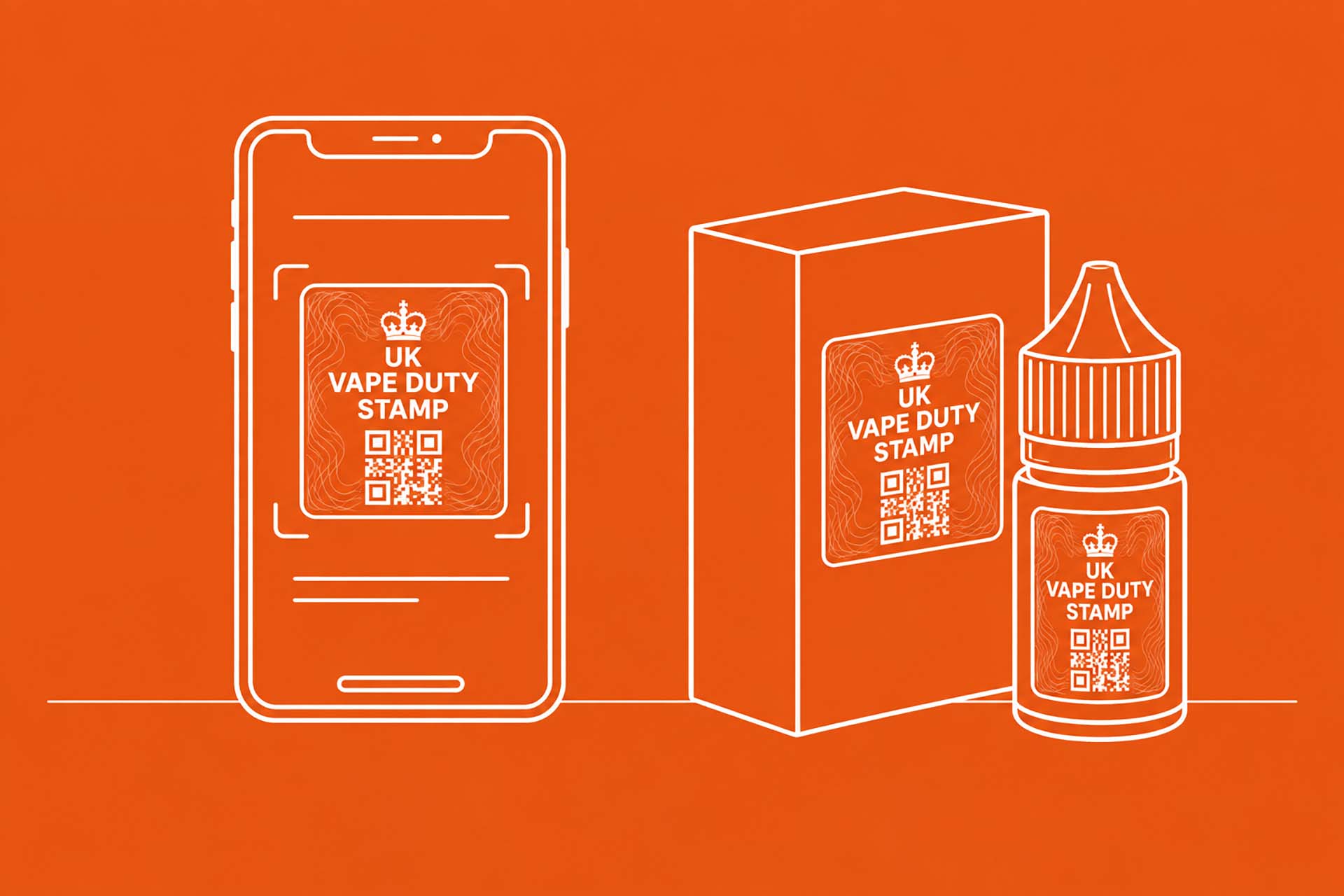
Vaping Products Duty adds £2.20 of excise duty for every 10ml of vaping liquid. The duty stamp works alongside it as visible proof. It's a secure label with physical security features, and it helps retailers, enforcement teams and HMRC spot legitimate stock.

The stamp goes on the outermost retail packaging. That means the box, or the bottle itself if you sell it without a box. It also has to seal the pack, so nobody can open it without damaging the packaging or the stamp. Stamps can't be reused, either.

Across the trade, people often call this "vape stamp duty". Officially, the rules sit under HMRC's Vaping Duty Stamps Scheme (VDS). They cover every e-liquid, whether it contains nicotine or not.

Transitional vs digital duty stamps: the core difference

Both stamps do the same basic job. The real difference shows up after the stamp goes on.

The transitional duty stamp

The transitional stamp carries physical security features only. It has no scannable code, so nobody scans it at any point in the supply chain. HMRC introduced it as a bridge, giving production lines time to adapt before the digital system takes over.

The digital duty stamp

The digital stamp carries the same physical features, plus a unique scannable code. Whoever applies it must activate it at the moment of affixing. That activation links each stamp to a set of product and operator details. After that, the stamp gets scanned again at set points, including permitted movements under duty suspension and release for consumption.

In practice, the digital stamp turns every retail unit into a traceable record. As a result, HMRC can follow a product from the production line to the shelf.

FeatureTransitional stampDigital stamp
Physical security featuresYesYes
Scannable unique codeNoYes
Activation when affixedNoYes, by the affixing operator
Scanned through the supply chainNoYes, at affixing, permitted duty-suspended movements and release
Linked product dataNoYes, from the SKU record
Aggregation codes for cartons and palletsNoYes
Long-term roleBeing phased outThe permanent standard

Transitional stamp deadlines and the dates to plan around

The transitional stamp has a short, fixed life. Approved businesses can buy transitional stamps until 30 November 2026 and affix them until 31 December 2026. Digital stamps have been available since 1 September 2026. Then, from 1 January 2027, digital becomes the only stamp anyone can affix.

Meanwhile, a separate clock runs for older stock. Retailers and wholesalers can keep selling eligible unstamped stock they already hold until 31 March 2027. After that, every vaping product outside duty suspension needs a stamp.

You may still see older dates online. HMRC's first timetable closed transitional stamp sales on 31 August 2026. It then extended the window following industry feedback, so the dates above are the current ones.

What brand owners need to know

You probably won't buy stamps yourself

Only HMRC-approved purchasing operators can buy stamps. That means UK manufacturers, warehousekeepers and UK representatives, ordering through the appointed supplier's secure platform. HMRC also caps each operator's purchases over a rolling three-month period. So unless you hold those approvals yourself, your stamps come through a partner. For that reason, your partner's approvals, limits and stamp controls matter as much as your own planning.

Your product data becomes part of the stamp

Digital stamps link to product records in the supplier's system. For each SKU, HMRC's guidance asks for details such as the GTIN barcode, brand, flavour and product type. It also asks for volume to the nearest 0.1ml, nicotine strength and a JPEG product image. Nicotine products also need their ECID or GBID notification number.

Most brand owners hold this information already. However, it often sits across spec sheets, artwork files and notification records. Pulling it into one clean dataset now avoids delays at the stamping stage.

Transitional stamps suit short runs, not long plans

A transitional stamp only helps if it goes on before 31 December 2026. So any stock that won't reach finishing by then should plan for digital from the start. Otherwise, you risk ordering stamps for a pipeline that outlasts the affixing window.

Digital stamping puts new work on whoever affixes

The digital stamp brings activation, data capture and scanning at several stages. Packed units also need aggregation codes for cartons, master cases and pallets. Operators report these through an API built to the GS1 EPCIS standard. None of this needs special hardware, since any iOS or Android device can scan a code through an app. Still, it needs a reliable process on every single run.

This matters most if an overseas factory stamps your goods. First, a UK representative must buy the stamps on the factory's behalf. Then the factory has to activate and scan every digital stamp correctly, outside the UK.

Your packaging still needs a home for the stamp

The stamp needs a clear spot on the outermost pack where it seals the opening. The supplier's testing shows a digital code still scans on curves down to a 10mm radius. So most boxes, bottles and pods can carry one. Even so, check your artwork before your next print run. For timing, our duty stamp timeline shows how far ahead stamp orders need to start.

How Xyfil covers your stamping, whichever route you take

Every brand reaches the UK market differently, so the stamp switch lands differently too. Below, we focus on what the move to digital stamps means on each route. For a full side-by-side of the services themselves, see our comparison of Xyfil's stamping and fulfilment routes.

If we already manufacture for you

Stamping already sits inside our production process. So the move from transitional to digital stamps happens on our line, and nothing changes on your side.

If you import part-finished stock

Your goods arrive without the retail box and stay unstamped until we finish them in the UK. As a result, you never hold transitional stamps that might outlast the affixing window. We simply apply the stamp each date requires, and from January that means digital. Our guide to importing part-finished stock covers the wider benefits of this route.

If you import retail-ready stock

We stamp your finished packs on arrival and release them to the market. From 1 January 2027, that stamp will be digital, and we handle activation and scanning as we affix it.

If your own overseas factory stamps

This route changes the most. Whoever affixes a digital stamp must activate and scan it, so your factory takes on that work. We plan the process with you before any stamps ship, alongside the bank guarantee and reconciliation the route requires.

If you're based overseas

You'll need a UK representative to take part in the scheme at all. Our import representation service covers registration, stamp requisition, duty accounting and HMRC liaison.

Once your stock is stamped

Our fulfilment and storage service holds stock in duty suspension until orders call for it. That way, your duty point follows your sales rather than your stock arrivals.

Vape duty stamp FAQs

When do transitional vape duty stamps stop?

The buying window closes on 30 November 2026. After that, the last day to apply one is 31 December 2026. New stock then takes digital stamps only.

Can stock with a transitional stamp still be sold in 2027?

HMRC's cut-offs apply to buying and affixing transitional stamps. Its guidance doesn't set a separate sell-by date for stock that already carries one. So if you plan to hold transitionally stamped stock for a long time, check your position with HMRC first.

Do overseas manufacturers need a UK representative?

Yes, if they want to affix stamps as part of their own manufacturing process. The UK representative applies for approval and buys the stamps on their behalf.

Does nicotine-free e-liquid need a duty stamp?

Yes. Vaping Products Duty covers all vaping liquid, with or without nicotine. So nicotine-free products need a stamp too.

Do I need special scanners for digital duty stamps?

No. HMRC's guidance sets no scanner model requirements, and an iOS or Android device can scan codes through an app. However, third-party scanners need their own integration with the supplier's API.

Preparing your brand for digital duty stamps

Transitional stamps will fade out within months, while digital stamps become the permanent standard. For most brand owners, the sensible move is to plan around digital now. Start with your product data, check your packaging, then pick the route that fits your supply chain.

Want a second pair of eyes? Send us your product list and current route to market. We'll show you how each stamp type affects your plans, and which Xyfil service keeps you covered. Book a call with the team.

Which VPD Route Fits Your Business? Comparing Xyfil’s Stamping & Fulfilment Options

From October 1st, every unit of vaping liquid sold in the UK carries a duty stamp. That single rule reaches every brand owner in the market, no matter how your liquid gets made. Maybe Xyfil already manufactures your range. Maybe you import finished stock from an overseas factory. Maybe your production sits somewhere between the two. Either way, the question isn't whether you need a stamp on your product. It's which route gets you there without slowing your business down.

We built several service routes because brand owners don't all start from the same place. This article walks through each one. It looks closely at the stamping side, so you can work out which route fits your situation and book the readiness call that gets it moving.

Whichever way you make your liquid, the stamp still lands on you

Vaping Products Duty attaches to the product, not to whoever happens to manufacture it. So if you outsource production, import stock, or run your own overseas factory, the stamp requirement still follows your liquid to a UK shelf. Once you know a stamp has to go on, you need to know who puts it there, and how.

That's where the four routes below come in. Each one answers a different starting point. Together, they cover almost every brand owner working toward the 1st of October.

Already manufacturing with us? The stamp is already built in

If Xyfil makes your liquid, this part stays simple. Duty stamp affixing sits inside our standard production process, alongside batch tracking and the audit trail HMRC expects to see. You don't add a step, book a separate supplier, or plan a second movement of goods. The stamp goes on as your bottles come off the line, right alongside everything else we already do for you.

That's the advantage of one relationship covering the whole job. Nothing changes about how you work with us today. You simply end up with a stamped, compliant product, without lifting a finger.

Importing part-finished stock? UK Stamping & Finishing keeps you duty-suspended

Plenty of brand owners import in bulk and finish closer to the point of sale. The new duty hasn't broken that model. If anything, it's made the model stronger. Under UK Stamping & Finishing, your part-finished goods arrive at our Preston site under duty suspension. From there, we complete carton assembly and insert your leaflets. We apply the stamp, seal the packs, and case the finished product, all before anything moves on.

The reason this route works so well comes down to what it protects. Because your product travels in its labelled pouch, bottle or pod, without the retail box, stamps carry zero risk in transit. They're requisitioned, controlled and applied entirely within our approved premises instead. Because the goods stay duty-suspended throughout finishing, you also keep a further duty-suspended movement afterwards.

Duty falls due only when stock actually releases for sale, and you can stamp on demand rather than committing your whole shipment at the factory gate. Export the same batch instead, and you sidestep the penalty of destroying a stamp you never needed. We've written about this route in more depth elsewhere. It remains our strongest recommendation for any brand still deciding how to structure its supply chain before October.

Importing retail-ready stock? Duty Stamping Only gets it moving fast

Sometimes your goods arrive finished, packaged and ready for shelf, with nothing left to do but stamp them. That's Duty Stamping Only. We apply the stamp to your retail-ready product as it passes through our bonded warehouse. That happens on a single duty-suspended movement at import, and we release the goods into the UK market from there.

It's the simplest route on this list, and the trade-off is an honest one. Because the goods arrive already finished, you don't retain the onward bonded flexibility that part-finished stock gets under UK Stamping & Finishing. For a brand that already has its packaging locked down and just needs a compliant stamp applied, that trade-off rarely matters much. Speed usually wins out instead.

Manufacturing overseas at your own factory? Overseas Stamping under Bank Guarantee closes the gap

Not every brand owner wants to outsource their manufacturing and that's a perfectly reasonable position. If your own overseas factory already holds HMRC approval, we can still help. We act as your UK duty representative and dispatch your stamps to that approved address. We carry the legal and financial liability for every stamp from the moment it leaves our custody, with the strict reconciliation that arrangement demands handled as part of the service.

This route exists for one reason. A brand with an established overseas manufacturing relationship shouldn't have to unwind it just to get compliant. You keep your factory and your existing relationship. We handle the part of the process that has to happen on UK soil.

Once it's stamped, Fulfilment & Storage takes it from there

A stamped product still needs somewhere to sit and a way to reach your customer. Our fulfilment & Storage service covers goods-in and duty-suspended storage. It also covers pick, pack and dispatch to both retailers and consumers, with returns handled from the same site. Add it onto any of the four routes above, and your stamped stock never has to leave our facility until an order actually calls for it.

If you're based overseas yourself, Import Representation gets you started

Every route above assumes someone on UK soil is registered, accounting for duty, and talking to HMRC on your behalf. If that's not currently you, Import Representation is where you start. We act as your UK representative and handle scheme registration and stamp requisition. We also run the duty accounting and manage HMRC liaison, so an overseas manufacturer or brand owner gets a compliant route to market without setting up a UK operation from scratch.

On rates: compliance shouldn't carry a premium

A stamp applied properly, on a line built for the job, tends to cost less than one bolted onto a process that was never designed for it. That holds true across all four routes above. It's a large part of why brand owners come to us for stamping, even in cases where we haven't manufactured a drop of their liquid. Ask us about rates on a readiness call. We'll talk you through what each route costs against your actual volumes, rather than a generic price list.

The trust question, answered the same way every time

Whichever route you land on, the reconciliation behind it works to the same standard. Every stamp we apply gets tied back to an HMRC dataset and a GS1-aggregated batch record. That way, your stock stands up to an audit whenever HMRC asks to see it. That discipline runs through every route in this article, and it's the same discipline we've applied since 2014, through every rule change the industry has faced so far.

Which route fits you? A quick way to check

Run through these questions, and the right route usually becomes obvious fairly quickly:

  • Does Xyfil already manufacture your range? Your stamp is already handled.
  • Do your goods arrive part-finished? UK Stamping & Finishing is your route.
  • Do your goods arrive retail-ready? Duty Stamping Only gets you there.
  • Does your own overseas factory hold HMRC approval? Overseas Stamping under Bank Guarantee closes the gap.

Layer Fulfilment & Storage onto any of those answers. Add Import Representation underneath if you're based overseas yourself.

Book the call before the routes fill up

The 1st of October is now weeks away, and every brand owner working through this decision is racing the same date. Whichever route fits your business, the sooner you confirm it, the sooner your stock moves through the process instead of sitting behind it.

Book a VPD readiness call →

Your Bottle Is Now a Tax Document: Designing Packaging for Stamp Integrity

Your artwork used to answer to one boss: your brand. From the 1st of October 2026, it answers to a second one too. That boss is HMRC. The Vaping Duty Stamps Scheme turns every bottle, pod and pouch into a compliance document. It's still your branding. But it's a tax record now too. Get the label wrong, and you can't legally sell what's inside it.

That sounds dramatic. The mechanics, though, are simple. So let's walk through three things. What a duty stamp actually is. When it becomes mandatory. And why your artwork needs attention now, not during next year's panic.

What a duty stamp actually does

A vaping duty stamp isn't just an ink mark. It's a physical stamp with digital features built in. Those features carry data through the supply chain. That data covers who manufactured or imported the product. It covers product details too. And it tracks the product's journey to the shelf. HMRC only issues stamps to approved businesses. These are called Authorised Purchasers. They're approved manufacturers, importers and warehousekeepers, and they buy stamps directly from the scheme's appointed supplier.

So the stamp does three jobs at once. It proves duty has been accounted for. It gives HMRC a traceability trail. And it sits on your label, competing for space with your branding, your ingredients list, your batch code, and everything else you're already required to print.

The timeline you're designing against

Two dates matter here. They're easy to confuse. Vaping Products Duty starts on 1 October 2026, at a flat rate of £2.20 per 10ml. That's the tax. The stamps are the enforcement layer, and they run on a slightly different clock.

A transitional stamp carries businesses through the interim period. So you won't need finished, fully compliant stamp artwork on day one. Full duty stamps become mandatory from 1 April 2027. Retailers can keep selling unstamped stock only until 31 March 2027. After that date, an unstamped product isn't just non-compliant. It's illegal to sell, and it can be seized.

Read that timeline the way a production planner would. You have roughly eighteen months to move from "transitional" to "fully stamped." Artwork revisions take longer than most brand owners expect. Print trials do too. And packaging sign-off is rarely quick, especially once your printer is handling every other brand racing the same deadline.

Why this is a packaging problem, not just a compliance one

Here's the part that catches brand owners out. A duty stamp needs its own reserved space on the label. It can't overlap your logo. It can't sit on top of your nicotine warning or your batch code. And it can't be bolted on after your artwork is already at the printer.

Treat it as a design brief instead, and you sidestep the expensive alternative. That alternative is reprinting an entire run, because the stamp doesn't fit, obscures required text, or lands somewhere your production line can't apply consistently. A short list of questions helps you get ahead of it.

Ask your manufacturer these questions

  • Has our label layout got dedicated, unshared space for the stamp?
  • Does the stamp placement interfere with any of our existing mandatory text?
  • What happens to our artwork when transitional stamps switch to the next stage?
  • Who handles sourcing stamps as an Authorised Purchaser, and how does that fit our supply chain?
  • Will stamp integrity survive our actual production line, not just a design mock-up?

If your manufacturer can't answer these clearly today, your artwork risks becoming a rush job next year. And that's exactly when every other brand in the market starts chasing the same print slots.

Build it into your next artwork pass

The brands handling this well aren't racing the deadline. Instead, they're folding stamp space into whatever artwork revision they're already planning. That way, the compliance requirement rides alongside routine design work. It never becomes an emergency reprint.

That's a genuinely small ask right now. Left until 2027, though, it turns into a scramble. You'd be competing against every other brand's print run, your own retail deadlines, and a shrinking supply of press time.

Talk to us before your next print run

We work through label layout as part of production planning. That way, stamp space, mandatory text and your brand all sit together on the same artwork, first time. Want a second pair of eyes on your current packaging before your next print run?

Contact us to see how we can help keep you compliant ahead of the vape stamp duty.

From Lab to Bottle: Inside the Life Cycle of E-liquid Production

Concept & Market Research

Flavour Development in the Lab

Prototyping & Refinement

Compliance & Safety Testing

Scaling Up: Manufacturing & Quality Control

Packaging & Branding

Logistics & Distribution

How Xyfil Supports Every Step

Conclusion: More Than Just a Bottle

The Psychology of Colour in Vape Packaging Design in 2025

Why Colour Matters in Vape Packaging

The Psychology Behind Colour Choices

Vape Packaging Trends in 2025

The UK Plain Packaging Discussions

How Brand Owners Can Leverage Colour Effectively

How Xyfil Can Help

Final Thoughts

9 Packaging Trends Shaping Retail Designs in 2024/25

1 - Sustainable Packaging Leading the Charge

2 - Retro and Nostalgic Designs Making a Comeback

3 - Hand-Drawn Aesthetics Adding a Personal Touch

4 - Textured Packaging Designs Enhancing Sensory Experiences

5 - Transparent Packaging Boosting Trust and Transparency

6 - Minimalism Capturing the Essence of Simplicity

7 - Wraparound Designs Creating Dynamic Visuals

8 - Big and Bright Colours Making a Bold Statement

9 - Inspired by Nature Bridging the Gap with the Environment

Regulatory Changes and the Future of Packaging

Conclusion The Need for Continuous Innovation

8 Vape Packaging Trends for 2024

Packaging is more than just a means for holding products; it's an essential aspect of branding, consumer engagement, and sustainability. In the dynamic world of vaping, packaging trends evolve to captivate an audience that is not just looking for high-quality products but for experiences. Here are eight vape packaging trends that are sure to make a statement in 2024, shaping not only the look of products but also the future of the industry.

1. Sustainable Materials

The Eco-Focused Vaper

In a world where climate change and sustainability are at the forefront of consumer consciousness, vape companies will likely embrace eco-friendly packaging with open arms. The year 2024 will see a significant shift towards materials like biodegradable plastic, recycled paper and card, that can outperform traditional options in terms of recyclability and sustainability.

The Impact on Brands

Brands that make the switch to sustainable materials can expect a boost in their eco-credentials, appealing to a growing demographic of vapers who make purchasing decisions based on environmental impact. Not only that but with governments looking to increase sustainable measures, there may be soon a change in requirements for more sustainable vape packaging.

2. Minimalist Designs

The Art of Less

Amid the noise of competing brands, minimalism speaks volumes. In vape packaging, a minimalist design doesn't just mean clean lines and a simple colour palette; it's an intentional focus on essential information and a sleek, professional aesthetic. Brands are stripping away clutter to present a calm and confident image that suggests quality and reliability.

Maximal Impact, Minimal Effort

When done right, less is more. Brands like Supergood have established their minimalist approach through their entire collection of E-Liquids, focussing on brand messaging, bold text, simple patterns and eye-catching colour combinations. This no-nonsense style of packaging is efficient and effective.

3. Interactive Packaging

Engaging the Senses

The future of vape packaging is interactive, inviting the consumer to touch, feel, and experience the product before it's even opened. QR codes, hidden features, and even packaging that doubles as a game or puzzle may become more common, creating a stronger bond between consumer and brand.

Virtual Interactivity

Brands can embrace the growing interest in augmented reality (AR) to create a virtual interactive experience. With a simple smartphone app, vapers can unlock hidden videos, product information, or even digital environments that complement the brand's narrative.

4. Going back to the Basics

Purposeful Simplicity

The trend towards reducing excess in packaging means brands are looking to create packaging that is not only aesthetically pleasing but functionally minimal. These designs focus on reducing the use of plastic and secondary packaging to the bare essentials, aligning with a more environmentally conscious consumer mindset while maintaining usability and effectiveness.

5. Upcoming Regulatory Challenges

Staying Versatile

2024 will be marked by an industry on its toes, ready to pivot as packaging regulations continue to shift. The UK government’s proposed changes to vape product packaging are a stark reminder that adaptability and foresight are vital for brands.

The Changing Landscape

In response, vaping companies must design packaging that accommodates future regulatory requirements without sacrificing brand identity. Transparency with ingredients, simple flavour names and creative use of simple patterns and colours will become a key part of the packaging strategy.

6. Bold Colors and simple patterns

Making a Splash

For brands looking to stand out, vibrant colours and uncomplicated patterns are key in 2024. Utilising the psychology of colour, packaging can convey emotion, energy, and potency that resonate with consumers. Neon hues paired with gradients and metallic accents add a modern twist to packaging that demands attention on crowded shelves.

The Science of Colour

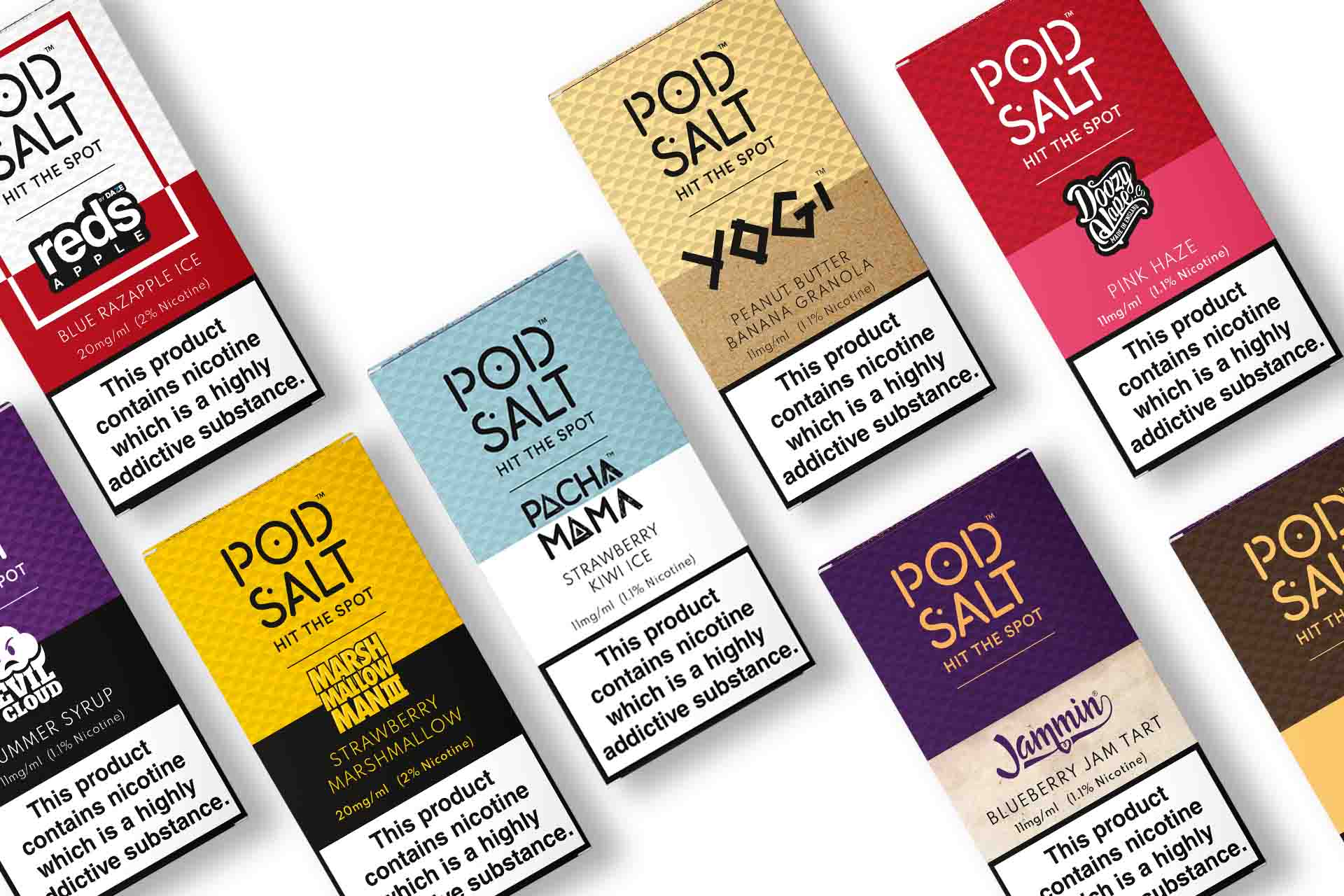
Rather than a frenzied jumble of colour, strategic use of a bold, primary colour or a sophisticated palette can enhance brand recognition. Brands like Pod Salt have embraced this trend by using subtle patterns with high-contrast colours to deliver a visual punch that stays with the consumer long after the purchase.

7. Storytelling Packaging

Beyond the Product

Vape packaging is not just a means to an end; it’s a storytelling tool. In 2024, brands that weave a compelling narrative into their packaging will win the hearts of consumers. Whether it's the origin of the product, the ethos of the company, or the aspirations of the vaper, the story told through the packaging adds a personal touch that connects on a deeper level.

8. Tactical Textures

The Touch is Important

Tactile engagement with packaging can enhance the user experience and leave a lasting impression on vapers. Textured surfaces, patterned finishes, and even raised elements that vapers can feel make for a package that’s not only visually pleasing but engaging on multiple sensory levels.

In summary, the packaging landscape in the vaping industry in 2024 is advancing towards sustainability, interactivity, and a more thoughtful, inclusive approach to design. As we move through the year, these trends will continue to shape the market, showing us that packaging is not just a necessary container but a canvas for creativity and innovation.

Supply Chain Management with Xyfil – Benefits and Best Practices

Supply chain management (SCM) is a set of strategies and processes that are used to coordinate the flow of goods, services, and information between suppliers, manufacturers, distributors, and customers. It includes managing materials and inventory, setting up production schedules, coordinating logistics and distribution channels, tracking shipments, ensuring customer satisfaction, and controlling costs.

E-Liquid manufacture involves the production of vaporizer consumable liquids, such as e-juice and vape oils. The manufacturing process requires a complex supply chain to ensure that all necessary ingredients are sourced from reliable suppliers and delivered on time to be used in production. Proper supply chain management can help minimize costs associated with wasted materials and lost productivity, as well as ensure that customers receive quality products when they are promised. With the right strategies in place, E-Liquid companies can keep up with the growing demand for their products while maintaining quality and cost-effectiveness.

Benefits of Implementing Supply Chain Management

The benefits of using Xyfil's SCM services for E-Liquid brands are numerous. By streamlining production and inventory processes, companies can reduce the time and cost associated with having to source new or duplicate products when stock is low. Furthermore, supply chain management helps improve the quality control process by ensuring that all ingredients used in production are up to regulations and quality standards.

When you work with Xyfil you know that you are getting high-quality products and services thanks to our ISO and GMP certifications. Not only do we create robust products, but our robust services mean that we deliver high quality each and every time.

Additionally, efficient SCM practices allow companies to be more flexible and responsive by quickly adapting to changes in demand. Finally, SCM helps E-Liquid brands keep up with growing customer demand for their products by ensuring that all necessary ingredients and materials are on hand when needed, thus resulting in timely deliveries.

Best Practices for Developing an Effective E-Liquid Supply Chain

Xyfil offers a comprehensive set of services to help E-Liquid brands develop an effective supply chain. We strive to provide our partners with the tools and resources they need to succeed in today's competitive market.

To start, we recommend automating inventory management processes as much as possible. This will help reduce wasted time and energy, as well as minimize potential errors. Additionally, Xyfil uses data analytics tools to track and analyse supply chain performance so that we can identify areas for improvement. We also implement risk mitigation strategies to reduce the likelihood of disruptions in production or delivery.

Finally, we strive to streamline logistics and distribution processes. For example, our warehousing and fulfilment services can help reduce transportation costs by consolidating orders into larger shipments. By delivering to your B2C customers we can help keep your costs, space, time and management low so you can focus on your next big product launch.

By leveraging Xyfil's experience in supply chain management, E-Liquid brands can feel confident that their products are being manufactured, produced and delivered on time, ensuring customer satisfaction and staying competitive in the market. With Xyfil's effective supply chain services, E-Liquid brands can optimize their operations and maximize their profits.

Xyfil delivers time and time again

E-Liquid brands can trust Xyfil to provide comprehensive and effective supply chain management solutions that meet their needs. Our services are designed to help companies streamline processes, reduce costs, improve quality control, and remain competitive in the market. We use data analytics and risk mitigation strategies to ensure that our customers are getting the highest quality products and services. By leveraging our expertise in SCM, E-Liquid brands can rest assured that our operations are running smoothly and efficiently.

Xyfil is here to help you exceed expectations and achieve success. Book a meeting with us today to get started.

Sustainable Vaping: Make the Switch to Eco-Friendly Products

As the vaping industry continues to grow, so does the potential for environmental waste and pollution. In order to cultivate a healthier planet and reduce our effect on the environment, vape manufacturers can help you take steps to make your products more eco-friendly. In this article, we'll discuss how vape manufacturers can help you switch to more sustainable products in order to produce environmentally friendly vape products.

The Problem with Disposables

A major issue with vape products is the amount of E-Waste they produce. Disposable vapes are often thrown away and not recycled, leading to a large influx of non-biodegradable materials in our landfills. Even worse, many of these disposable devices contain valuable metals and plastics that could be repurposed and recycled.

The other issue with disposables is that they're difficult to recycle. Many of the components inside these devices are not able to be separated and recycled. Vape brands should consider switching to more sustainable options that are easier to recycle and reuse. By switching to an eco-friendlier option, vape manufacturers can help your brand reduce its environmental impact.

Making the Change to Reusable Devices

For vape brands looking to reduce their eco-footprint, making the switch to reusable devices is a great option. There are several types of reusable devices on the market, from refillable pods and cartridges to larger tank systems. Refillable pod systems offer more flexibility with E-Liquid flavours and have become increasingly popular in recent years. Tank systems also offer a higher level of customization, allowing users to choose different types of coils and vape settings.

Developing a pod kit system is a great way of introducing your current disposable vape customers to the world of vaping. Offering a range of refillable pods with different nicotine strengths is an easy way to help them get started while encouraging them to switch from disposables to reusable devices.

E-Liquid - the sustainable vaping option

For vape brands, investing in turning your disposable vapes into E-Liquid - currently known as Bar Salts - is another way that you can reduce your environmental footprint. Bottles of E-Liquid last longer than disposable devices and can be packaged in recyclable bottles. By switching to E-Liquids rather than disposable devices, brands can reduce their E-Waste from single-use lithium batteries and plastics that would otherwise end up in landfills.

Additionally, vape brands can look into using recycled materials for their boxes - this not only helps reduce waste but gives your products an eco-friendly feel.

Perhaps consider reducing any unnecessary packaging and going for a more minimalist look. Where applicable, it is possible to apply peel-and-reveal labels to bottles, removing the need for boxes.

Establishing your sustainable vape brand

Vape brands should consider creating eco-friendly and sustainable vape products in order to reduce their environmental footprint. Not only can this help you create a healthier planet, but it also gives your brand an eco-friendly reputation. Investing in refillable pods, tank systems and recyclable E-liquid bottles are all great ways to reduce waste and help your brand become more sustainable.

At Xyfil, we are a vape manufacturer with the tools to help create sustainable vape products for your brand. Our team of specialists can provide advice on the best options for your brand, from E-liquid development for pod kits to producing E-Liquid bottles and Bar Salts. We are actively looking towards the latest developments and updates in manufacturing, to help create a sustainable way to manufacture whilst being as eco-friendly as possible. With our help, you can make sure that your products are sustainable, high quality and compliant.

An Inside Look at the Top 8 E-Liquid Packaging Design Trends for 2023

The vaping industry is always innovating and creating unique experiences, from the product to the packaging. Keeping up with new trends in design can be a challenge for companies in this ever-evolving market. To help you stay up-to-date and impress your customers, we’ve looked into what’s going on within the vaping industry and compiled a list of the top 10 E-Liquid packaging design trends for 2023 that you should consider.

Top 8 Vaping Packaging Design Trends for 2023

1. Sleek Minimalism: Simplicity is key for minimalistic designs as they strive to create an impactful, yet uncomplicated visual experience. This trend promotes an uncluttered look with plenty of negative space and sleek, clean lines. The minimalism approach is all about making an impression with subtlety and sophistication.

2. Bold Branding and Typography: Brands are tapping into their creative sides to create unique typography and logo designs for their packaging. This trend encourages companies to use bold fonts that truly reflect their brand identity, as well as eye-catching colours and patterns to help their products stand out on the shelves.

3. Unique & Eye-Catching Shapes: To capture consumer attention, brands are utilizing unique shapes for their packaging. From square containers to triangular boxes and beyond, these designs offer an exciting way to display your product in a captivating manner.

4. Colourful Patterns and Textures: Eye-catching colours and textures can help brands create a unique visual experience for customers. This trend encourages companies to utilize patterns, illustrations, raised printing, and other elements that help their product stand out from the competition.

5. Nature-Inspired Designs: Packaging designs are embracing the natural world, with designs that capture the beauty of nature through vibrant colours and detailed illustrations. From plant-focused patterns to animal or insect themes, this trend encourages companies to draw inspiration from the outdoors and create unique packaging experiences.

6. Customizable Features: To help customers stand out in a crowded space, brands are using customizable features to make their products more unique. From adding personalized text and logos to creating custom-shaped containers, this trend encourages companies to get creative with their packaging designs.

7. Industrial Aesthetics: Companies are looking for ways to capture the attention of tech-savvy customers by embracing industrial aesthetics in their packaging designs. This trend encourages brands to use metallic colours and geometric shapes to give their product a modern and stylish look.

8. Retro Influences: This trend involves bringing back old-school designs from the past with a modern twist, such as classic fonts, vintage illustrations, and muted colour palettes that capture a nostalgic feeling for customers. These designs can help brands stand out in a competitive market and tap into the nostalgia factor.

Custom Packaging Solutions

Custom packaging solutions are becoming more popular in the vaping industry, as companies look for ways to create a unique experience for their customers. From custom shapes and sizes to personalized printing options, this trend encourages businesses to think outside of the box when it comes to their packaging designs. Companies can utilize custom foam inserts, windows or labels that feature their logo or brand colours, helping them stand out from the competition.

Additionally, companies can choose from a variety of finishes for their product that creates a completely different look depending on the chosen finish. This could be satin or gloss, spot UV or embossed, or even uncoated which can make for a more natural finish. With custom packaging solutions, companies can create a unique and branded experience for their customers.

Sustainable Packaging Solutions

Sustainable packaging is becoming an increasingly popular trend in the vaping industry as companies look for ways to reduce their environmental impact. This involves using materials that are recyclable, biodegradable, or compostable. For example, some companies are using paper-based packaging with vegetable dyes and recycled content that is easy to recycle and reuse. Additionally, some companies are moving towards removing packaging entirely and having all the necessary information on the product solely. Sustainable packaging solutions help brands become more eco-friendly while also giving them a competitive edge in the market.

In conclusion

As the vaping industry continues to grow, so do the packaging design trends. These trends are helping companies stand out from their competition and create a unique experience for customers. From colourful patterns and textures to customizable features and sustainable solutions, there is no shortage of ways brands can differentiate themselves in 2023. Utilizing any of these packaging design trends is sure to help companies gain a competitive advantage in the vaping industry.

Whether you're looking to rebrand, have a new product range ready to hit the shelves, or are dreaming up your next big product, Xyfil can help. Our team of expert designers have the experience necessary to bring your ideas to life. With experience taking hundreds of vape and CBD brands to market around the globe, Xyfil guarantees quality and results.

Contact us today for more information on how we can help you.