

Tag Archives: e liquid compliance

Australia Considers Toughening Restrictions on Vaping

Despite being the home of one of the world’s toughest restrictions on vaping, the Australian government are considering further tightening. The aim is to crackdown on children accessing E-Cigarettes. But is it creating more harm than good?

The current vaping regulations in Australia

Currently, it is illegal to purchase nicotine-containing E-Liquid, and devices in Australia without a prescription. Each state however regulates issues such as sales, public use, age limits etc.

All states require retailers to be given approval for selling E-Liquid but at this time, none have been granted approval. Similarly, many states allow the sale of nicotine-free E-Cigarettes, but the products cannot claim to help quit or reduce smoking. These include Australian Capital Territory (retailers must have a tobacco license) and Tasmania, Queensland, Victoria and New South Wales have the same rule but sellers don’t require a license.

The proposed changes

The Australian federal government are considering key changes targeting specific areas such as importation rules and tougher labelling laws. A public consultation will be held to cover the four areas:

  • Changes to importation and border control laws required to stop illegal products entering Australia
  • Pre-market assessments of vapes to create a regulated source of products for pharmacists and doctors to prescribe
  • Labelling, advertising and flavouring of vapes that make them attractive to children
  • Stronger identification and regulation of nicotine-containing products

While these are being debated, the health Minister Mark Butler, has announced a ban on menthol cigarettes and other cigarette flavours plus additives.

The public consultation on vaping reforms will be open until the 16th of January.

The AMA (Australian Medical Association) has welcomed the federal government’s plans to tighten tobacco control and calls for the below changes to be made:

  • reducing the concentration limit from 100mg/ml to 20mg/ml, and introducing limits on the flavours and volume of nicotine that can be prescribed or ordered,
  • banning the importation of nicotine vaping products through the Personal Importation Scheme,
  • adding Nicotine Vaping Products to Real Time Prescription Monitoring programs,
  • restricting the use of Medicare smoking cessation items to a patient’s usual doctor, consistent with previous advice provided by the AMA.

Have these regulations really helped?

There’s much to debate with Australia’s already tight regulations on vaping. They clearly haven’t had the impact the government wished as they feel the need to tighten them further. And research has suggested that these changes may have been more detrimental to the smoke-free objective.

A recent study published by the BMJ (British Medical Association) analysed the smoking rates and cigarette consumption in 6 jurisdictions, across different regulatory environments for vaping. These included Alberta, Ontario, Quebec and British Colombia, UK and Australia. It was noted that, unsurprisingly, Australia had lower rates of vaping and a much lower rate of declining smoking rates, in comparison to the other countries.

And other countries are taking note of the failings. CAPHRA (Coalition of Asia Pacific Tobacco Harm Reduction Advocate) have submitted a consultation document to Australia’s Therapeutic Goods Administration (TGA). They believe that Australia’s method of medicalising vaping is failing and that there needs to be open access for smokers looking to quit smoking.

Keep posted on the latest news with Xyfil.
Industry news – Danish Government Proposes Nicotine Ban

In a move that mirrors New Zealand’s prior shift in nicotine-containing products, Denmark is following in their steps. Recently, the Danish government have proposed a nicotine ban to anyone born in 2010 or after. No doubt in hopes of ensuring future generations remain nicotine-free.

The proposed bill is believed to help reduce the number of smokers, coming into effect in 2028 – when those born in 2010 turn 18. From then on, the legal age requirement for buying nicotine-containing products will increase each year. Importantly though, it is noted that they are not banning the use of nicotine-containing products, just the ability to buy them. So, what does this mean?

There are concerns that this style of strategy fails to consider tobacco harm reduction by limiting items such as E-Cigarettes and E-Liquid. Any vaping product that contains nicotine will also fall under this ruling and therefore manufacturers and brands need to be on the lookout.

Compliance labelling – Keep your vaping products compliant

These new market changes can happen quickly and sometimes before companies have a chance to react. Luckily this occurs less and less nowadays but changes to regulations do still occur. And these require brands and companies to rethink their strategies and their products.

Lately, there have been many countries that have started to lean towards banning flavours. This has resulted in brands having to limit their flavour lists or create whole new ranges to remain relevant. Similarly, the move towards changing the legal age for purchasing nicotine-containing items may require brands to change up their product warning labels each year, to mirror the changing age limit.

This could be quite costly for companies having to re-print/re-package their products each year. Or perhaps compliance guidelines for these countries may take on a new approach?

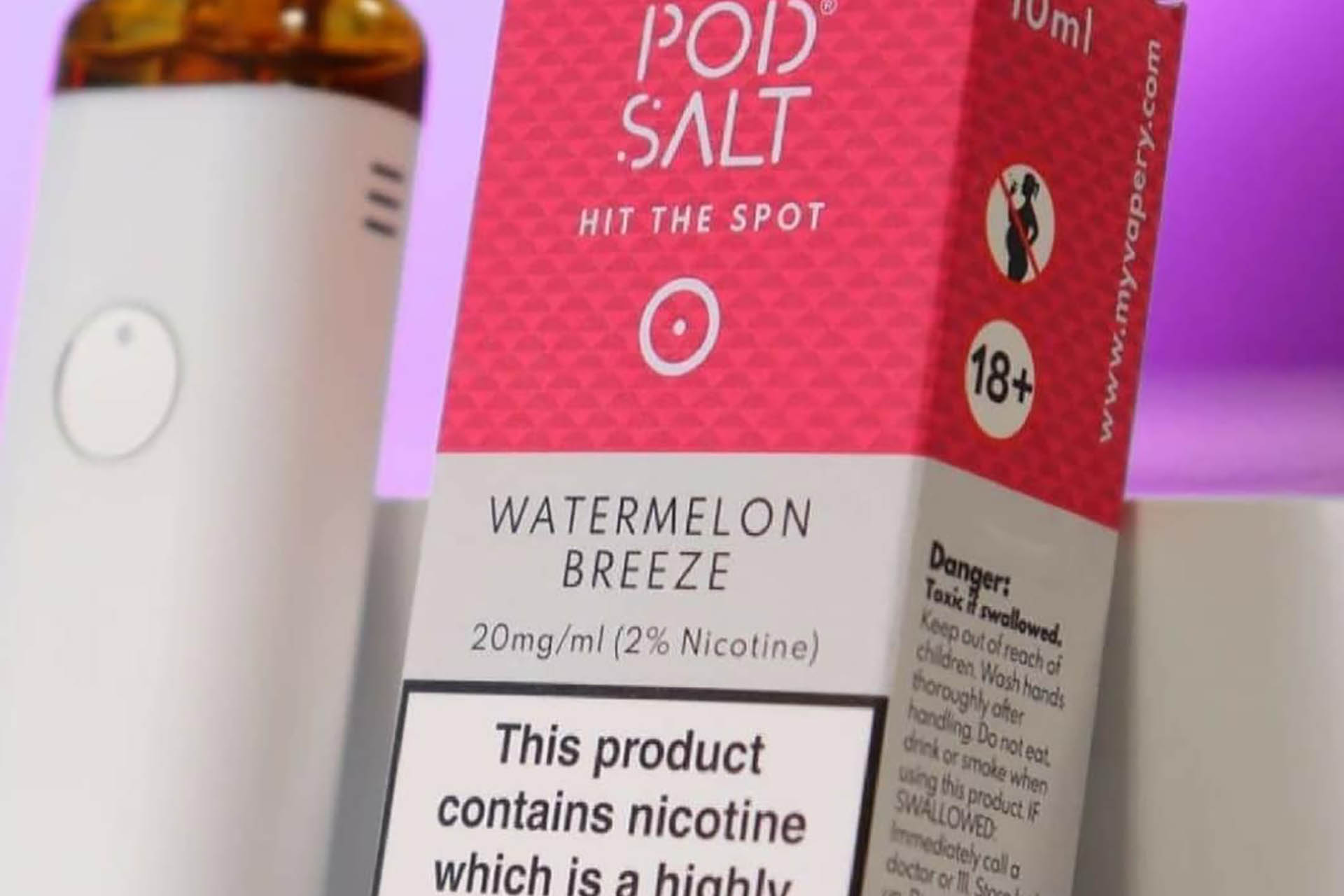
In our opinion, we believe it is possible that governments will change the legislation for product labelling for nicotine-containing products. Currently, to be TPD compliant, vape products that contain nicotine must have an ’18’ age restriction symbol on the packaging and labels. Thereby it could be very likely that a new symbol to signify age restriction is created and will become a requirement for products to be sold in affected countries. But at this moment in time, there have been no talks on the subject, possibly due to the legislation not yet coming into effect. We’ll keep you posted as soon as we know.

The ability to cope with market changes

At Xyfil we are actively on the alert for any market changes that could impact brands and help them manoeuvre the market. Whether it’s updates to regulations, changing flavour recipes, updating information on product labelling and more, we’re here to help.

Our in-house compliance team are dedicated to ensuring that your products meet the necessary requirements for the market you wish to target. And with our 10+ years of experience in manufacturing, R&D, production, flavour development, logistics and more, Xyfil are more than ready to help.

Keep in the know with the latest in the vaping industry with us at Xyfil. Check our info hub for more news.

Compliance in the EU – All You Need to Know

When manufacturing and selling E-Liquids and E-Cigarettes in the EU, many of the regulations are the same as what we currently hold in the UK. Brexit and the exit-withdrawal agreement resulted in the UK adopting its own version, the Tobacco and related Products Regulations (TRPR). It also resulted in the Tobacco Products and Nicotine Inhaling Products (Amendment) (EU Exit) Regulations 2020. Whereas previously the UK was covered by the EU’s Tobacco Products Direction (TPD), or European Tobacco Products Directive (EUTPD) (2014/40/EU).

The EU Regulations

TPD and the EUTPD cover the manufacture, presentation and sale of all tobacco related products including E-Cigarettes. Much like the UK’s regulations, these directives govern the packaging, labelling and ingredients, alongside adverting restrictions, creation of a smoke-free environment, tax measures and activities against illegal trade, and acquiring anti-smoking campaigns.

For E-Cigarettes particularly, new rules were introduced:

  • minimum standards for safety and quality
  • information is provided to consumers of nicotine containing products
  • that protections are put into place to prevent children from starting to use the products

These rules came into effect as of May 2017 for any nicotine containing product:

  • restrict the maximum volume of E-Liquid in a single container to 10ml
  • restrict capacity of tanks to no more than 2ml
  • restrict nicotine strengths of E-Liquids to no more than 20mg/ml
  • be child resistant and tamper evident
  • not contain caffeine, taurine or colourings
  • be submitted to the EU-CEG (The EU Common Entry Gate)
  • include relevant warnings and information

As you may have realised, these are the same regulations we currently use in the UK with the only difference being the regulatory body that products should be reported to. For the EU, nicotine-containing products such as E-Liquids and E-Cigarettes must be reported to the EU-CEG. This regulatory body requires information on ingredients, emissions and toxicological data that is then accessible by the public for complete transparency. By doing so it ensures the quality and safety requirements are being met, and any non-compliant products will not be listed and should therefore be avoided.

Interestingly, in some EU countries, the EU-CEG is used to provide information on other products such as:

  • novel tobacco products
  • herbal products for smoking
  • nicotine-free E-Cigarettes

How Xyfil can help with compliance

“Our in-house team of experts are able to perform the necessary toxicological evaluations on the compounds detected during the analysis of your e liquid and its emissions. More critically, we also know how to gather this data into the format required by all European member states and complete the required submission for your business.”

Pradip, Compliance Officer, Xyfil.

You may be looking for help with establishing compliance for your existing products, before moving your products to EU markets. If so, our in-house compliance team can help by taking control of the process. From toxicology testing to filling out the paperwork and completing the process by informing the EU-Common Entry Gate, we can help you get your product to market without hassle.

Looking to create a new product to take the EU markets by storm? As a Toll Manufacturer, we are able to help you wherever you are in the process of product development. Be it manufacture, labelling & packaging, dispatch, marketing assets and of course compliance, Xyfil has you covered. With our white label manufacturing services for E-Liquid, CBD and cosmetics, we can efficiently offer quality products that comply with EU regulations. Backed by 10+ years of experience. With thousands of our products already available in the EU market, there’s never been a better time to start with Xyfil than now.

Get to know us more and meet the team over on LinkedIn.