
Tag Archives: compliance

Countries Around the Globe with Vape Flavour Bans

Regulations around vaping change often across the globe, with countries making changes each year, whether for better or worse. It’s important for manufacturers, retailers and brands to be aware of the latest regulatory changes to ensure vaping products remain relevant and compliant.

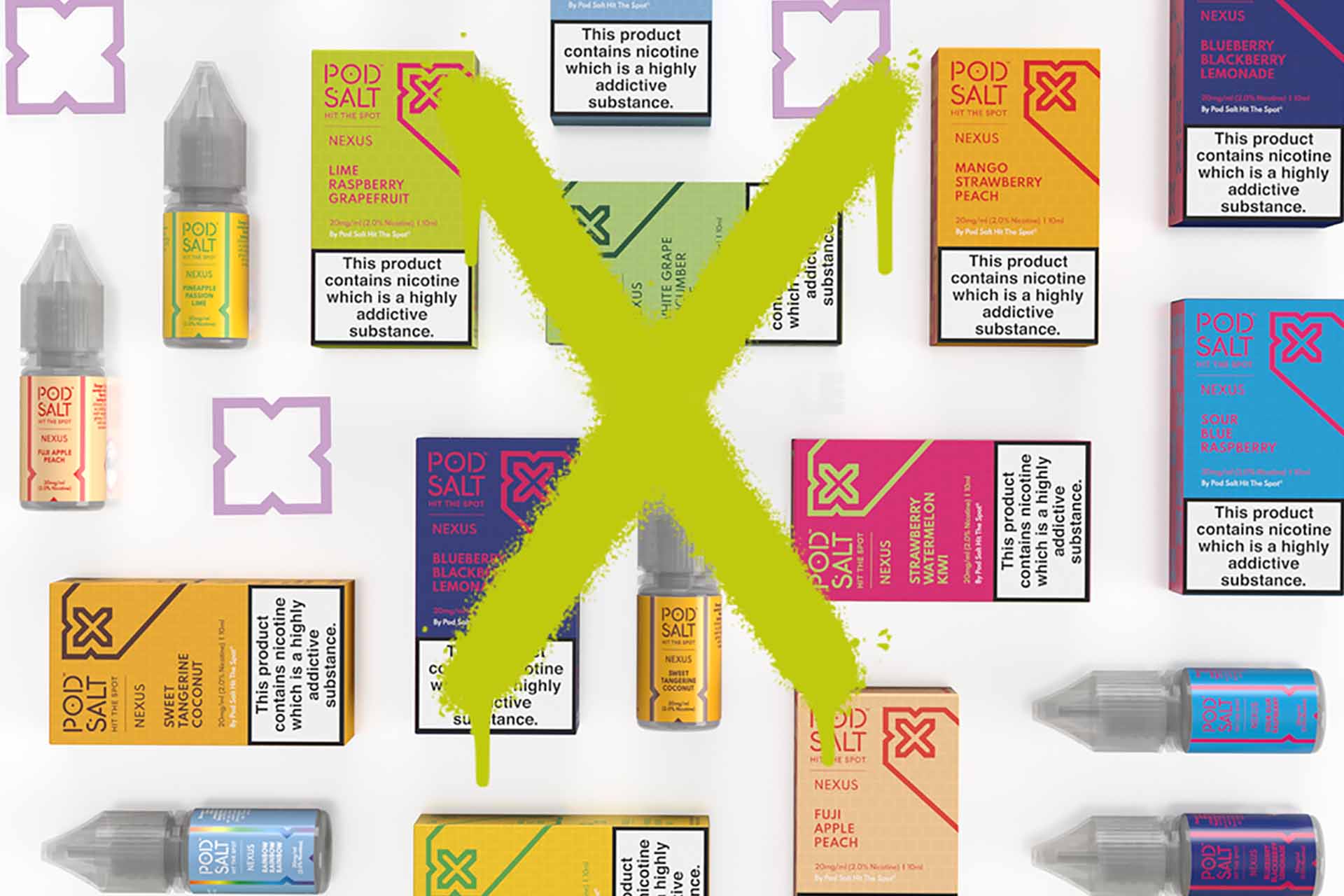
One such regulatory change that seems to be occurring more frequently, is the ban on flavoured vapes. Many governments have elected to ban flavoured vapes in the hopes of dissuading those who are underage, from vaping. Although research has suggested that flavours play a crucial role for vapers on their quit-smoking journey, there are many countries that have implemented this ban or are planning to do so.

China bans flavoured vapes but not for exports

As of October, the country has become yet another to ban flavoured vapes with plans to only sell tobacco-flavoured vapes. Interestingly though, China has not banned the export of flavoured vapes, only the use within its own country. This began the recent overhaul of vaping regulations in China which include a consumption tax.

China’s ban on flavours stems from the same concern shared by others on the health risks for young people who take up vaping. However, research has noted that flavours other than tobacco, play a part in helping users quit smoking. Perhaps alternatives to flavour bans need to be looked at to help minimise the potential losses of helping smokers quit with vapes.

Other countries that have banned flavoured vapes

Although vaping is legal in these countries, they too have implemented flavour bans on vaping products, limiting them to tobacco with or without the inclusion of mint & menthol. If you are interested in taking your brand to any of the below countries, you will need to tailor your products to the current limitations.

Canada

  • Nova Scotia - tobacco only
  • Ontario – tobacco, mint & menthol (vape stores are allowed stock flavours)
  • Prince Edward Island – tobacco only
  • Quebec (potential) – unconfirmed
  • Saskatchewan – tobacco, mint & menthol

US

  • Colorado (allowed in vape shops & tobacconists, not traditional retail outlets)
  • Connecticut (pending) – unconfirmed
  • Chicago – tobacco only
  • Maine (pending) – unconfirmed
  • Maryland (pending) – unconfirmed
  • Massachusetts – tobacco only
  • Minnesota (only cities Minneapolis, St. Paul and Duluth) – tobacco only
  • Kansas City (pending) – unconfirmed
  • Missoula – tobacco only
  • New Jersey – tobacco only
  • New Mexico (pending) – unconfirmed
  • New York (except for those permitted by the FDA) – tobacco only unless FDA approved
  • Rhode Island – tobacco only
  • Utah (potential) – unconfirmed
  • Vermont (pending) – unconfirmed

EU

  • Lithuania – tobacco only
  • Latvia - tobacco only
  • Finland – tobacco only
  • Estonia – tobacco & menthol
  • Hungary – tobacco only
  • Denmark – tobacco and menthol
  • Netherlands – tobacco only
  • Slovenia – tobacco only
  • Spain - *proposed ban* - potentially will be limited to tobacco & menthol

Other

  • Ukraine – tobacco only
  • China – tobacco only
  • New Zealand (partial flavour ban, only speciality vape shops can sell flavours) – tobacco, mint & menthol unless sold by speciality vape shops.

Create your signature tobacco vape range with Xyfil

Just because these countries have limited their selection to tobacco flavours, with some offering mint & menthol also, doesn’t mean your brand should miss out. Tobacco flavours can be distinct and unique thanks to the wide variety of tobacco brands we can recreate.

Our E-Liquid manufacturing solutions offer premium products and versatile services. Whether you want to opt for white label manufacture or OEM, we can cater to your needs and the regulations of whichever country you wish to resale in. By using our premium, award-winning nicotine salt formula, along with our high-quality tobacco flavours that have gone on to win awards, your brand is in safe hands.

Contact us today to find out how we can help you create the next, best Tobacco range of E-Liquids.

China’s Latest Regulation Changes Include Vaping Tax

New legislation in China has taken effect as of the 1st of November, which continues to change the landscape of the Chinese vaping industry. Last year changes were made that established a need for Chinese E-Cigarette companies, to obtain a license to be able to continue selling to customers.

Along with this change, the requirements and regulations that were introduced triggered a wave of closures, especially in hardware manufacturing. And these new changes could bring even more issues for Chinese vapers and manufacturers.

The new vaping tax implemented in China

On the 1st of November, the Chinese government implemented a new tax on vaping products. This consumption tax includes a 36% tax on the production or import of E-Cigarettes and an 11% tax on wholesale distribution in China. China’s Ministry of Finance has announced that E-Cigarette products will now be a sub-item under the tobacco tax item list.

Companies that have a license from the tobacco monopoly authorities (STMA) to produce E-Liquids, or companies that have obtained/licensed the use of a registered trademark or another company’s E-Cigarette products, will have their consumption tax calculated differently depending on how the products are sold or produced. Similarly, for E-Cigarettes made through an OEM, it is down the company that owns the trademark is liable for the consumption tax.

  • Producers and wholesalers pay tax based on the sales of the production and wholesale of E-Cigarettes. 
  • Companies that sell E-Cigarettes through an agency in the production process must pay tax based on the sales of the distributors or agents to the e-cigarette wholesaler.
  • Importers of E-Cigarettes must pay tax based on the component taxable price.
  • Companies engaged in processing E-Cigarettes in the production cycle must calculate the sales of trademarked e-cigarettes and the sales of OEM e-cigarettes separately; if they are not accounted for separately, they must pay consumption tax together.

Is there a concern about exports? A later announcement clarified that exports of E-Cigarettes are eligible for the tax refund and exemption policy. This means that although the internal Chinese vaping industry is expected to feel the pinch, exports will not see the same treatment.

What is concerning though is the potential for more Chinese E-Cigarette companies to begin struggling to keep up with the added tax. Not to mention the added cost that very likely could be transferred to consumers in China.

These changes come from China’s further clampdowns on vaping products that saw flavoured vapes banned. Having started in October, only tobacco-flavoured vapes are to be sold in China.

Are there any positives from these changes?

One thing is for sure, with the increasing legislation in China, it has begun a crackdown on requirements for E-Cigarettes and vape products in an effort to improve quality. These include regulations on the battery, ceramic coil, nicotine content, and flavours.

What these changes do help is establish a greater baseline for good quality products. Ensuring that vape products meet these criteria could help in reducing the presence of fake disposables and lower-quality E-Liquids that have begun to flood the market.

The largely untapped market of potential vapers

The Chinese vape industry has seen a similar explosion in growth as most of the world these past few years. With a smoking population of around 300 million, China is a prime spot for pushing the quit-smoking journey with the aid of vaping.

And yet the rate of E-Cigarettes usage in China is far behind other countries such as the UK and US; a mere 1.5% compared to 30%. Therefore, there is significant room for expansion but with these latest regulation changes, it may become harder to do so. Only time will tell if more high-quality vaping products will make their way into the Chinese market.

New Certification – Philippines Vaping Regulations Update

Recently, the Philippines took the vaping industry by storm with the news of its progressive vaping laws. The updated legislation helped to cement vaping as a legal smoking cessation tool and new rules are being introduced to help ensure the safety and quality of vaping products in the Philippines.

Certification for vaping products in the Philippines

The Bureau of Philippine Standards (BPS), an agency part of the Department of Trade and Industry (DTI), has recently added E-Cigarettes to the list of consumer goods subject to mandatory certification.

The recent vape law which came into effect on August 13th, 2022, regulates the importation, manufacture, sale, packaging, distribution, use, and communication of E-Cigarettes or vapes. But under the DTI Order 22-06, Series of 2022, E-Cigarettes and E-Liquids as well as HTPs will be subject to mandatory certification from January 4th, 2024.

This certification process is hoped to ensure the quality of vaping products and prevent illicit trade.

What this means for those importing to the Philippines

With these changes, it means that products covered by the BPS Mandatory Product Certification Schemes will be required to bear the Philippine Standard (PS) mark or Import Commodity Clearance (ICC) sticker. This helps to identify whether the products have been certified to conform to the necessary quality standards.

This will cover both E-Cigarette devices and E-Liquid.

Before this deadline, importers to the Philippines can voluntarily opt for a Philippine Standard mark or Import Commodity Clearance. To ensure your products meet the criteria for importing into the Philippines, you can check the DTI for more information.

How Xyfil can help with compliance

As a leading E-Liquid manufacturer in the UK, we have over ten years of experience in manufacturing and producing high-quality products around the globe. We are able to tailor products to match vaping regulations for countless countries including the UK, EU, US, and Middle East. Not only can we manufacture E-Liquid products to the specifications you require, but our in-house compliance team also excels in ensuring your products meet the requirements for where you wish to sell.

We have helped countless brands take their products to markets across the globe by offering compliance services. Not only can we make your products to spec, but run the necessary laboratory tests and process products with the necessary government agencies on your behalf.

If you would like to see how we can help you with your E-Liquid brand or create a new range, contact us today.

Avoiding Confusion with Nicotine-Free Disposables Legality

Zero-nicotine disposables are growing in popularity, but some stores are worried to stock them.

Disposable vapes are a perfect first step for many vapers as they offer a convenient and simple way to vape. Recently, some brands have branched out into developing 0mg nicotine disposables which provide all the flavour but without nicotine. But there have been reports of retailers being hesitant about stocking these sorts of devices.

Local shops refusing to stock nicotine-free disposables – why the confusion?

It seems there’s been some confusion with nicotine-free vaping products as some stores in the UK show hesitancy with stocking them. BetterRetailing reported that stores were refusing 3,500 puff nicotine-free devices with tank capacities above 2ml. Not all zero-nicotine disposable vapes offer such a high puff count, but many are beginning to do so.

So, why the confusion? By now, most are aware of what is TPD compliant (the UK regulations for vaping products). When it comes to disposable devices, we know that the E-Liquid capacity should be no more than 2ml which means they are usually capped at 600 puffs (650 at a push). And with recent store raids tackling illicit vapes that are not TPD compliant, it’s not hard to see why some stores are turning away these 0mg devices.

However, TPD guidelines are restrictions for nicotine-containing products, and thereby nicotine-free devices are exempt from these rules. Much like how shortfill E-Liquids are exempt from the restrictions which is why they can be larger than 10ml (the max capacity for nicotine-containing E-Liquids). Nicotine-free disposable vapes, if they contain no nicotine whatsoever, are legal in the UK at higher puff counts and capacity.

You can find more information on compliance with disposable devices in the UKVIA's guide.

The pros and cons of zero nicotine disposables

Nicotine-free disposables are yet another part of a vaper’s quit-smoking journey. Although they won’t help with quitting tobacco at the beginning, many vapers find that over time, they lower their nicotine strength after vaping for some time.

Since nicotine is an addictive substance that many want eventually to also quit, 0mg vapes are the perfect solution for vapers at the last leg of their quitting journey. These types of devices allow vapers to enjoy their favourite flavours and vaping experience without the addictive nicotine.

Zero-nicotine devices also allow for a smoother vape due to a lesser throat hit with the absence of nicotine.

Why retailers should consider stocking 0mg devices

As we mentioned, zero nicotine vapes are perfectly legal in the UK, including those at higher puff counts and tank capacities – so long as it is confirmed they are 0mg. No nicotine disposables offer a final stepping stone for vapers to quit nicotine whilst still enjoying their favourite brand or flavours. Vapers who already vape at low nicotine strengths can opt to use these nicotine-free devices as a means of quitting nicotine.

They are also suitable for casual smokers who may not need the nicotine hit as much as heavy smokers, but still struggle to quit because of the habits created by smoking. As vaping mimics, the motions of smoking a cigarette, these sorts of devices could be of benefit to light/casual smokers to quit cigarettes.

Vape retailers who can cater to a smoker’s quitting journey from start to finish may see greater customer loyalty and retention.

White label and OEM zero-nicotine products

Here at Xyfil we produce and manufacture a variety of E-Liquids for brands that range from our award-winning Nicotine Salts to premium Freebase Nicotine, to nicotine shots and nicotine-free E-Liquids. Our quality formulas and flavours continue to win awards across the vaping industry and with our white label manufacture, you get access to our existing, premium combinations. And even better, you can request these as 0mg to create shortfills or your own zero-nicotine disposable devices.

Or speak with us about our OEM opportunities for creating a bespoke range of no-nicotine disposables. With full flexibility throughout the entire process, we can help you go from idea to shop floor. Contact us today to start on your next range.

German Tobacco Tax Impacts E-Liquids Per ml

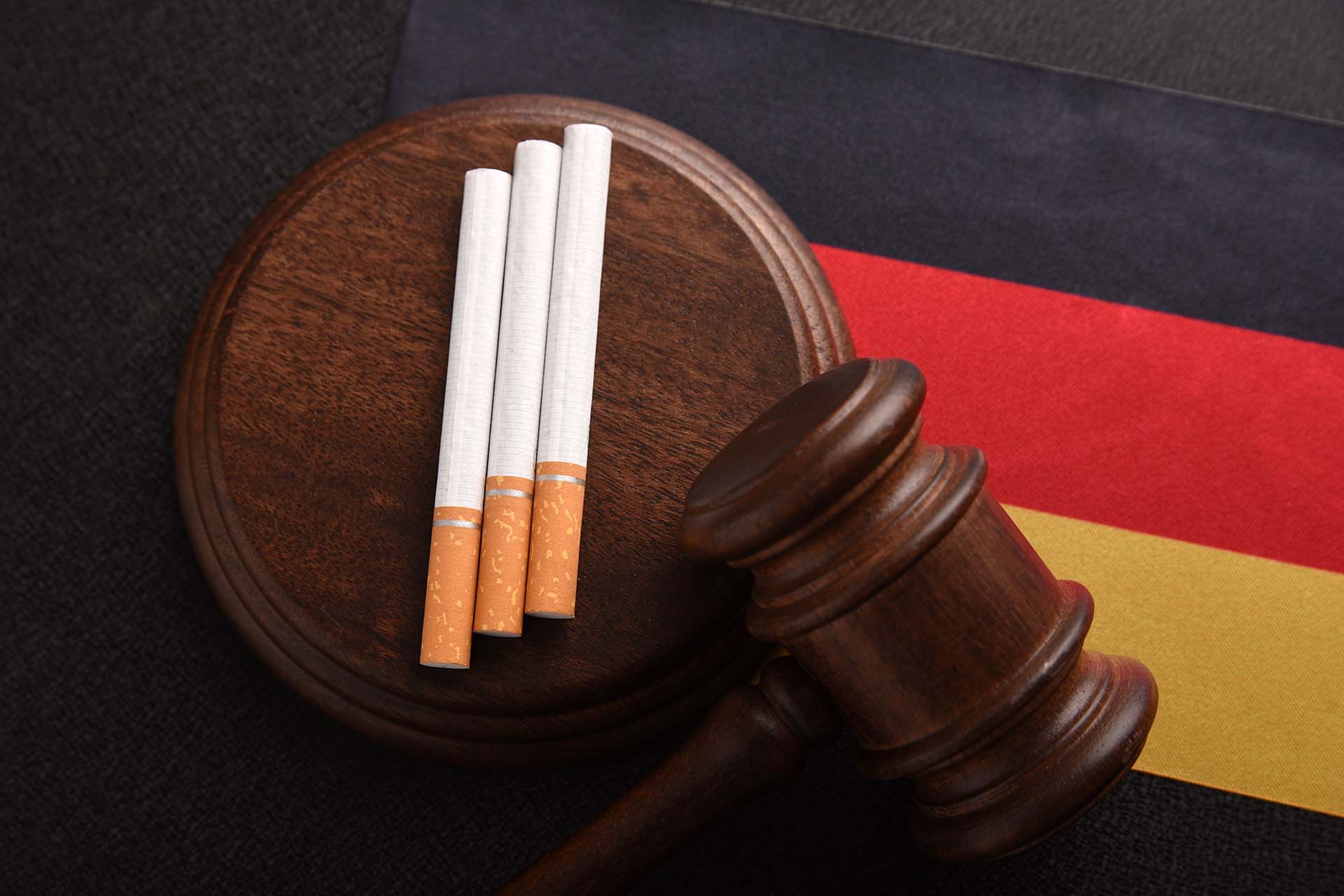
Back in 2011, the German Bundestag made a sudden amendment to the Tobacco Tax Act in an effort to modernise it. This resulted in an increase in tax for tobacco-containing products. But as of the 1st of July 2022, E-Cigarettes and E-Liquids, even those that do not contain nicotine, will also be subject to tobacco taxation.

The reform of the Tobacco Tax Act

On the 11th of June 2021, the German Bundestag made amendments to their Tobacco Tax Act with the Tobacco Tax Modernisation Act (TabStMoG). Originally it had been put forward that April but after various meetings, the Finance Committee further tightened the planned changes. The changes were aimed at increasing the tobacco tax for conventional cigarettes, cigars, cigarillos and fine-cut tobacco, as well as heated tobacco and water pipe tobacco.

All of this, of course, is in aid of trying to meet the EU's demand for becoming smoke-free. Therefore, as of 2022, smokers will have to pay more rising to 10 cents per pack, with a further 10 cents being added each year until 2025 and 2026 when it will increase to 15 cents per pack.

The new update to include E-Cigarettes & nicotine-free products

The new changes also dictated the future of E-Cigarettes in Germany. At the time of the amendments, it was mentioned that E-Cigarettes and nicotine-free products would be included in the future. And as of 1st July 2022, these will now constitute as a taxable item.

These changes have resulted due to an assumption by the German government, that vaping products are equally as harmful to health as tobacco products. Despite the expert advice and countless pieces of evidence that suggest the opposite, they hope this new tax will reduce the usage of vaping devices.

Taxation is calculated on a millilitre basis based on the volume of the substance. Products with high ml counts such as shortfills are likely to become much more expensive. As of July 2022, the tax rate is 16 cents per millilitre, which will then rise to 32 cents per millilitre from 2026.

Possible consequences of the taxation

It’s no surprise that these changes are going to impact businesses and consumers. Wildly criticised for its demonising approach to vaping, there are obvious concerns that it may drive fewer people to quit smoking. There's also the possibility it may push consumers to purchase cheaper products from other places in the EU. Even more questionably, the inclusion of nicotine-free products in this agenda means that shortfills no longer are likely to be a popular choice for vapers looking to get more for their money.

For businesses, investing in smaller bottle sizes is more likely to become the go-to in an effort to keep prices low for consumers. Rather than the typical 10ml bottles, smaller sizes like 5ml are likely to become more popular. The new taxation is likely to impact the pricing of products which quickly becomes a battle of profit vs sellability. Will consumers pay a higher price point for the products they enjoy? Especially if they can buy them elsewhere, cheaper.

Helping businesses establish updated product ranges to suit market changes and regulations is a speciality of Xyfil. We constantly keep up to date on the latest from the vaping industry to ensure that we can cater to global needs.

Here at Xyfil, we offer a wide variety of E-Liquid types and sizes including small bottle concentrates. Already we are working with brands who wish to keep their products in Germany, to update their products and packaging to reflect the new regulations. If you want to take your E-Liquid products to Germany, get in contact with us today.

The EFSA Put on Hold Novel Food Approval for CBD

Last month a decision was made by the EFSA (European Food Standards Agency) to put a hold on approving CBD as a Novel Food. It was cited that there was not enough data yet on the safety of CBD, and gaps in the data about potential hazards related to CBD.

The European Commission considers CBD to be a Novel Food product but requested feedback from the EFSA to agree on its approval. However, the EFSA revealed that further evaluations needed to be completed to ensure safety for human consumption.

What is a Novel Food and why is it important?

A Novel Food is defined as a food product that has not been consumed to a significant degree by humans before 15th May 1997, when the regulation first came into force. These pertain to newly developed, innovative food produced using new technologies and production processes. To be listed as a Novel Food, the items must be:

  • Safe for consumers
  • Properly labelled, so as not to mislead consumers
  • If Novel Food is intended to replace another food, it must not differ in a way that the consumption of the Novel Food would be nutritionally disadvantageous for the consumer.

Is this classification important for CBD? In short, yes. Having some sort of regulation that can ensure CBD products are safe and are not misleading, is important for customers and brand reputation.

A hold on approval isn’t necessarily a bad thing

There are some who might think this hold on approval is a bad thing for CBD but actually, it can be seen as a positive. The EFSA has noted that there are gaps in the data, but they have not outright suggested CBD isn’t safe for human consumption. The move to put it on hold in the EU is possibly a sign that they are considering following in the UK’s footsteps and requesting more data to be established. In the UK, we have already made the move to list CBD as Novel Food products and despite the EFSA’s decisions, the UK won’t be pulling CBD products from shelves, as the UK FSA have already taken steps to begin establishing regulations.

In the UK many CBD products are listed on the FSA’s website, those of which are legally allowed to be sold. They are still awaiting further assessment but many of them are allowed to be sold on shelves in the meanwhile, as there have been no immediate concerns raised.

Regulations for CBD is not something manufacturers should fear, in fact establishing regulations for CBD can only help to weed out illicit CBD products. Those that don’t contain the amount of CBD they claim or use sub-par, potentially harmful CBD (or none at all!), can easily deter consumers from trying CBD as the results from these products will only ever be lesser. Ensuring that consumers only have access to good quality products is how we can continue to grow the CBD market.

Why you should think about joining the CBD market

Even with the question of regulatory compliance hanging in the air, now is a great time to get ahead and prep your next CBD launch. CBD continues to be popular in the UK and overseas, and regulations only help to ensure that quality products are those that hit the market. Here at Xyfil we continue to produce high-quality CBD products, products that are listed on the FSA’s website, which means quality and safety for consumers.

Let us help get you to market with our experience in product development, manufacture and production. Not only this but we can help get your products onto shelves with our compliance team and understanding of market trends.

How to Bring Your Brand to the UK Market

Looking to expand and take your product elsewhere? Understanding the regulations for the country you wish to sell your vaping products, is essential as they differ around the globe. And it is certainly worth taking your product to other markets, especially if it’s already receiving great success elsewhere. Let’s briefly look at the different regulations that govern the three main territories, and how they might differ from those in the UK.

The regulations for other countries

If your products are already listed in these countries, then chances are you are already aware of the different regulations. Here’s a brief list of the key regulations across the EU, US and Middle East.

EU Regulations

  • Child-resistant & tamper-proof packaging
  • Must notify the appropriate regulatory body with ingredients in E-Liquids components in devices and refilling mechanisms of devices
  • Devices must be protected against breakage and leakage
  • It must be possible to refill devices without leakage
  • Devices must deliver a consistent dose of nicotine per puff
  • Capacity of tanks, pods and cartridges must be no more than 2ml
  • E-Liquids containing nicotine must be sold in volumes of 10ml or less
  • Nicotine strengths of E-Liquids must not exceed 20mg/ml
  • Legal age for vaping is set at 18 for most EU countries
  • E-Cigarettes and re-fill containers can’t be advertised or promoted, directly or in-directly

These TPD regulations guide the majority of EU countries in their handling of E-Cigarettes and vape products. However, there are some countries that have begun to implement flavour bans or ban vaping entirely. Find out more about EU regulations here.

US Regulations

  • Register your establishment and submit a list of products, labelling and advertisements
  • Submit data and pay user fees
  • Submit an ingredient listing
  • Apply to market a new tobacco product via one of three pathways
  • Submit quantities of harmful and potentially harmful constituents
  • Submit tobacco health documents
  • Submit a warning plan for smokeless tobacco
  • Include required warning statements on packages and advertisements
  • Submit a modified risk tobacco product (MRTP) application
  • Age-restricted for those under 21 years of age

It’s important to note that some states in the US have also implemented flavour bans. This means they only accept tobacco-flavoured vapes and E-Liquids. Some of the regulations differ between states with some outright banning vaping altogether.

UAE & Middle East Regulations

  • maximum nicotine concentration is capped at 20mg/ml
  • maximum tank capacity is no more than 10ml
  • maximum capacity of refill packages is no more than 50ml
  • must display all health warnings in Arabic and English that must cover at least 50% of the main display area. English to appear on the lower front, Arabic on the lower back.
  • must also display a health warning in Arabic and English: “This product may pose a health hazard when inhaled, swallowed or gets in contact with the skin.”
  • must not contain a variety of harmful ingredients & additives including cinnamic compounds
  • Prohibited to those under the age of 18

Some of these regulations can differ depending on the country as some Middle Eastern countries have outright banned vaping.

Many of these share similar restrictions with the main ones to take note of, are the limitations on size, strength, and ingredients, as these have an impact on the product you manufacture. Products that do not abide by the regulations of the country for reselling, will be classified as illegal and could be disposed of by authorities. Find out more about UAE regulations here.

Regulations for the UK

When bringing your brand and established products to the UK, you need to take into account the regulations established by TRPR (Tobacco and Related Products Regulations).

  • E-Liquid bottles that contain nicotine can be no larger than 10ml
  • Tanks, pods and cartridges can be no larger than 2ml
  • The maximum nicotine strength allowed is 20mg/ml (2%)
  • E-Liquids must not contain any ingredients that are disallowed
  • E-Cigarette packages must include an information leaflet
  • Packaging must include nicotine warnings on the front and back, covering 30% of the size

These regulations are very similar to the EU regulations with only small differences, but it’s important to make sure that your E-Liquid products match the specified strengths, max capacity, and warnings. Find out more about UK regulations here.

It is also worth noting that in the UK, advertising E-Cigarettes and vaping products is strictly regulated with only a few exceptions. Similarly, vaping products are age-restricted for those under the age of 18 and it should be a brand’s interest to ensure their products do not appeal to those who are underage.

For those with brands that cross different countries with different regulations, it could become the norm to label vaping products with the country it is intended to be sold in. Products like ELUX vapes have now begun including a ‘not for sale in the UK’ to their packaging for products intended for US markets. This is intended to help retailers from accidentally stocking products not legal in their country.

How Xyfil can help get you into the UK market

As a leading British E-Liquid Manufacturer, we have over ten years of experience in manufacturing and the production of E-Liquids suitable worldwide. We have helped hundreds of brands to market in the EU, UK and Middle East and more. Between our in-house compliance team and highly experienced members in all departments, we ensure that the products you want are suitable for the market you wish to hit. Whether that’s from the ground up with our white label and OEM E-Liquid manufacture, or with your pre-produced E-Liquids, we cover it all.

Xyfil is equipped to bottle your products in compliant bottling solutions, and our creative teams are able to create/edit product packaging to suit your needs. We offer many white label products which are already created and compliant for EU, UK and the Middle East to help you hit markets quicker. Or alternatively, if you’re looking to alter your existing products to suit new markets, we are more than equipped to handle any changes in product capacity, testing, packaging and more.

Contact us today to find out more about how we can help you.

UK Becomes the First Country to Regulate CBD Market

The UK has recently become the first country to regulate orally consumed CBD products. Currently, CBD has been touted as a novel food group item or supplementary, but the new move to regulate CBD hopes to “de-risk” CBD (Cannabidiol) to spur innovation. With a clear set of guidelines for orally consumed CBD products, there is a growing likelihood of improvement in the sort of products offered.

In response to this move, the FSA (Food Standards Agency) and the ACI (Association for the Cannabinoid Industry) has created a list featuring CBD products. These products have been given the green light to remain on shelves in line with the UK’s new novel foods regulations. Products that do not appear on the list can no longer be sold.

Ensuring these guidelines are met by CBD products not only helps to ensure the quality and safety of products in England and Wales, but also for investors looking to take part in the CBD industry. Trading Standards will also be enforcing the new rules with immediate effect on retailers selling CBD products.

Regulating orally consumed CBD products

From February 13th, 2020, no new CBD extracts, isolates or associated final products using the novel ingredient CBD, are allowed to be sold until they receive the necessary authorisation. Products that were available beforehand were required to send an application for assessment by the FSA. The complete process of evaluation can take around a year to complete. One month is allowed for the validation process, then up to nine months for the risk assessment, and up to seven months for any subsequent risk management and authorisation decisions.

Most applicants will be manufacturers of CBD brands including us here at Xyfil. A detailed dossier must be provided for existing and new orally consumed CBD products.

There are three parts involved. Firstly, part one should contain all administrative data such as information relating to the applicant. Part two should contain information specific to the novel food (along with a list of references) such as:

  • identity of the novel food
  • production process
  • compositional data
  • specifications
  • the history of use of the novel food and/or its source
  • proposed uses and use level and anticipated intake
  • absorption, distribution, metabolism and excretion
  • nutritional information
  • toxicological information and allergenicity

Part three should include the glossary or abbreviations of terms quoted in the dossier, certifications (on the accreditation of laboratories, certificates of analyses), full copies/reprints of all pertinent scientific data (published and unpublished), full study reports and scientific opinion of national/international regulatory bodies.

Ensuring the quality of the dossier, and the information provided significantly affects the time needed for assessment and authorisation.

Xyfil makes the process simpler for you

Brands can apply for authorisation of CBD extracts and isolates via our compliance and White Label service. We will guide you through the process and secure your products ready for sale. Here at Xyfil, we have worked on countless successful applications for CBD-based products. Our market-ready approach means less paperwork and less hassle in getting your business off the ground.

By working with us you can benefit from our purpose-built analytical laboratory, including patent-pending equipment for generating accurate emissions samples. Work with our dedicated scientists and let us handle your brand compliance from end to end. Get in touch today to get started on your CBD brand.

E-Liquid Brand Case Study: Drop E-Liquids

Who are Drop E-Liquids?

Drop E-Liquids offer a range of fantastical fruit flavour combos that create sweet and sharp, refreshing vapes. Fruit Drop aims to create authentic fruit flavours that vapers crave and create exciting fruit blends you can’t get anywhere else. They also include a range of candy-inspired flavours called Sweet Drop, focusing on classic British sweet flavours.

Fruit Drop boasts flavours such as Citrus Lychee Ice, Passion Fruit Mango & Pineapple and Grapefruit Blood Orange. There are even a couple of candy-inspired flavours as part of their Sweet Drop range from Drumstick to the classic Rhubarb & Custard.

This range of E-Liquids is offered as 100ml shortfills with a 70/30 (VG/PG) ratio that is ideal for Sub-Ohm vaping.

With a simplistic design, these E-Liquids can seem unassuming, but the minimalist approach works well in drawing the eye to their signature ‘drop’ design. Each drop features a distinct blend of colours that suggest the flavours of each bottle.

Who manufactures Fruit Drop?

Drop E-Liquids are manufactured here in the UK by Xyfil Ltd, a premium UK manufacturer of E-Liquid and CBD products. We work with Drop E-Liquids to provide the base ingredients for their chosen flavour profiles, to create unique blends you’ll find nowhere else. To make sure the flavours are authentic we only use premium food-grade ingredients sourced from the UK and overseas. Some brands choose a specific flavour blend to create a very specific type of profile, while others choose a flavour for us to recreate. We are able to work with as much or as little information towards a brand’s vision to help them create the product they wish to take to market.

All E-Liquids are mixed and bottled in our ISO 9001 accredited facilities which go through stringent checks to ensure the safety and quality of each batch. Throughout the process we work closely with Drop E-Liquids to make sure that flavours remain consistent, and that the brand’s image remains the same throughout the process. A premium brand means premium quality. In such a large market where flavours mean everything, coming up with new and unique blends is what sets brands apart. Ensuring that the flavour blends match up to a brand’s expectations is key.

Drop E-Liquids provide their own artwork for their shortfill bottles, which we apply during the production process. Some brands require us to design and create their ideal packaging and logos. Drop E-Liquids however already had a clear image of their intended packaging. Applying a brand’s existing artwork to the products we manufacture for them is but one part of the bespoke service we can provide.

From the ground up to the store shelf

Xyfil offers a bespoke manufacturing service for E-Liquids and CBD products, with a choice of white label or OEM (Original Equipment Manufacturer). No matter what step of the process your product is at, be it production, manufacturing, or development, Xyfil can help take your brand from paper to reality.

We work closely with our customers to ensure their vision becomes a reality whether it’s in flavour development, production, bottling, packaging, or any stage of the process. If you are looking for help with E-Liquid compliance and regulations, we are also able to provide this service by submitting compliance for you or guiding your brand on the right path.

If you’d like to work with us to manufacture your next premium E-Liquid brand, get in touch today to find out more.

Raids on Vape Stores in the UK – The Importance of Compliance

Recently, vape stores in the UK are seeing visits from Council and Police members in a surge to crackdown on illegal vape products. Up and down the country some vape stores are finding themselves missing thousands of pounds worth of goods. This is due to some vape stores selling products that are illegal by UK trading standards. Which has left a few store owners with fines to pay and lessons to be learnt.

Stores around the UK cleared of illegal vape products

Vaping has reached all-time high popularity in the UK with new products added to the market around the clock. Especially with the rise in disposable vape devices, the market has certainly seen an explosion of interest from brands looking to add their own disposables. To keep up with demand shelves are being heavily stocked with the products that consumers are looking for. But in the midst of the rush it’s easy for non-compliant products to slip through.

In the UK there have been numerous cases of vapers using illegal and sometimes counterfeit products. Not only is this harmful to customers but also to brands of counterfeited products, stores that sell them unknowingly and the vaping industry as a whole.

Only recently, a vape store on Oxford Street, Westminster, was cleared of £100,000 worth of items from their shelves. These counterfeit and illegal goods were removed by Met Police and Westminster City Council with a variety of these products pertaining to vapes. These were disposables that were counterfeit along with products not suitable for UK retail due to not meeting compliance requirements.

What are the legal requirements for selling in the UK?

If products are TPD/TRPR compliant there will be several key factors that you can easily look out for.

  • Disposables and vape kits will have a max capacity tank of 2ml.
  • The max strength nicotine allowed in the UK is 20mg/ml.
  • Packaging should include UK manufacturer’s contact details and name.
  • Packaging should include all necessary warnings.
  • Must be registered on the MHRA’s (Medicines and Healthcare Products Regulatory Agency) website.

For the full list of regulations, you can read the UKVIA’s (United Kingdom Vaping Industry Association) concise guide for compliant disposable vapes here.

How you can be careful when selling vape products

Avoiding illegal and counterfeit products means you avoid potential losses and fines. The biggest issue in the UK vaping market is certainly high strength vapes or those with bigger capacity than is legally allowed. If a product is more than 20mg/ml (2%) or has a capacity greater than 2ml, then it cannot be legally sold in the UK. Check out these top tips on how to sell vapes legally in the UK.

Restrictions and regulations across the globe differ meaning that it’s quite easy for higher strength vape products to exist legally. For example, for products in the UAE the max capacity of vape tanks is no more than 10ml. Although these are legal for sale in the UAE, they are not in the UK, and sometimes this confusion can lead to incorrect products being stocked on shelves.

Compliance made easy with Xyfil

Navigating compliance can be challenging with the many regulations and differences between countries. Here at Xyfil we have a dedicated compliance team that ensure our brands and the brands of our partners, are compliant with whatever market they wish to sell in. If you’re looking to create your own UK-compliant brand of E-Liquids and vape products, you can contact us to find out more, and make the most of our award-winning, premium products. If you’re looking to stock the products we manufacture, you can talk with our sister company My Vapery who can offer you premium, UK-compliant products that customers want.