• 01772 888 778
  • info@xyfil.com
  • Unit 1 & 2, Durton Lane Business Park, Preston, PR3 5LR

Category Archives: Packaging

Your Bottle Is Now a Tax Document: Designing Packaging for Stamp Integrity

Your artwork used to answer to one boss: your brand. From the 1st of October 2026, it answers to a second one too. That boss is HMRC. The Vaping Duty Stamps Scheme turns every bottle, pod and pouch into a compliance document. It's still your branding. But it's a tax record now too. Get the label wrong, and you can't legally sell what's inside it.

That sounds dramatic. The mechanics, though, are simple. So let's walk through three things. What a duty stamp actually is. When it becomes mandatory. And why your artwork needs attention now, not during next year's panic.

What a duty stamp actually does

A vaping duty stamp isn't just an ink mark. It's a physical stamp with digital features built in. Those features carry data through the supply chain. That data covers who manufactured or imported the product. It covers product details too. And it tracks the product's journey to the shelf. HMRC only issues stamps to approved businesses. These are called Authorised Purchasers. They're approved manufacturers, importers and warehousekeepers, and they buy stamps directly from the scheme's appointed supplier.

So the stamp does three jobs at once. It proves duty has been accounted for. It gives HMRC a traceability trail. And it sits on your label, competing for space with your branding, your ingredients list, your batch code, and everything else you're already required to print.

The timeline you're designing against

Two dates matter here. They're easy to confuse. Vaping Products Duty starts on 1 October 2026, at a flat rate of £2.20 per 10ml. That's the tax. The stamps are the enforcement layer, and they run on a slightly different clock.

A transitional stamp carries businesses through the interim period. So you won't need finished, fully compliant stamp artwork on day one. Full duty stamps become mandatory from 1 April 2027. Retailers can keep selling unstamped stock only until 31 March 2027. After that date, an unstamped product isn't just non-compliant. It's illegal to sell, and it can be seized.

Read that timeline the way a production planner would. You have roughly eighteen months to move from "transitional" to "fully stamped." Artwork revisions take longer than most brand owners expect. Print trials do too. And packaging sign-off is rarely quick, especially once your printer is handling every other brand racing the same deadline.

Why this is a packaging problem, not just a compliance one

Here's the part that catches brand owners out. A duty stamp needs its own reserved space on the label. It can't overlap your logo. It can't sit on top of your nicotine warning or your batch code. And it can't be bolted on after your artwork is already at the printer.

Treat it as a design brief instead, and you sidestep the expensive alternative. That alternative is reprinting an entire run, because the stamp doesn't fit, obscures required text, or lands somewhere your production line can't apply consistently. A short list of questions helps you get ahead of it.

Ask your manufacturer these questions

  • Has our label layout got dedicated, unshared space for the stamp?
  • Does the stamp placement interfere with any of our existing mandatory text?
  • What happens to our artwork when transitional stamps switch to the next stage?
  • Who handles sourcing stamps as an Authorised Purchaser, and how does that fit our supply chain?
  • Will stamp integrity survive our actual production line, not just a design mock-up?

If your manufacturer can't answer these clearly today, your artwork risks becoming a rush job next year. And that's exactly when every other brand in the market starts chasing the same print slots.

Build it into your next artwork pass

The brands handling this well aren't racing the deadline. Instead, they're folding stamp space into whatever artwork revision they're already planning. That way, the compliance requirement rides alongside routine design work. It never becomes an emergency reprint.

That's a genuinely small ask right now. Left until 2027, though, it turns into a scramble. You'd be competing against every other brand's print run, your own retail deadlines, and a shrinking supply of press time.

Talk to us before your next print run

We work through label layout as part of production planning. That way, stamp space, mandatory text and your brand all sit together on the same artwork, first time. Want a second pair of eyes on your current packaging before your next print run?

Contact us to see how we can help keep you compliant ahead of the vape stamp duty.

From Lab to Bottle: Inside the Life Cycle of E-liquid Production

Concept & Market Research

Flavour Development in the Lab

Prototyping & Refinement

Compliance & Safety Testing

Scaling Up: Manufacturing & Quality Control

Packaging & Branding

Logistics & Distribution

How Xyfil Supports Every Step

Conclusion: More Than Just a Bottle

The Psychology of Colour in Vape Packaging Design in 2025

Why Colour Matters in Vape Packaging

The Psychology Behind Colour Choices

Vape Packaging Trends in 2025

The UK Plain Packaging Discussions

How Brand Owners Can Leverage Colour Effectively

How Xyfil Can Help

Final Thoughts

9 Packaging Trends Shaping Retail Designs in 2024/25

1 - Sustainable Packaging Leading the Charge

2 - Retro and Nostalgic Designs Making a Comeback

3 - Hand-Drawn Aesthetics Adding a Personal Touch

4 - Textured Packaging Designs Enhancing Sensory Experiences

5 - Transparent Packaging Boosting Trust and Transparency

6 - Minimalism Capturing the Essence of Simplicity

7 - Wraparound Designs Creating Dynamic Visuals

8 - Big and Bright Colours Making a Bold Statement

9 - Inspired by Nature Bridging the Gap with the Environment

Regulatory Changes and the Future of Packaging

Conclusion The Need for Continuous Innovation

8 Vape Packaging Trends for 2024

Packaging is more than just a means for holding products; it's an essential aspect of branding, consumer engagement, and sustainability. In the dynamic world of vaping, packaging trends evolve to captivate an audience that is not just looking for high-quality products but for experiences. Here are eight vape packaging trends that are sure to make a statement in 2024, shaping not only the look of products but also the future of the industry.

1. Sustainable Materials

The Eco-Focused Vaper

In a world where climate change and sustainability are at the forefront of consumer consciousness, vape companies will likely embrace eco-friendly packaging with open arms. The year 2024 will see a significant shift towards materials like biodegradable plastic, recycled paper and card, that can outperform traditional options in terms of recyclability and sustainability.

The Impact on Brands

Brands that make the switch to sustainable materials can expect a boost in their eco-credentials, appealing to a growing demographic of vapers who make purchasing decisions based on environmental impact. Not only that but with governments looking to increase sustainable measures, there may be soon a change in requirements for more sustainable vape packaging.

2. Minimalist Designs

The Art of Less

Amid the noise of competing brands, minimalism speaks volumes. In vape packaging, a minimalist design doesn't just mean clean lines and a simple colour palette; it's an intentional focus on essential information and a sleek, professional aesthetic. Brands are stripping away clutter to present a calm and confident image that suggests quality and reliability.

Maximal Impact, Minimal Effort

When done right, less is more. Brands like Supergood have established their minimalist approach through their entire collection of E-Liquids, focussing on brand messaging, bold text, simple patterns and eye-catching colour combinations. This no-nonsense style of packaging is efficient and effective.

3. Interactive Packaging

Engaging the Senses

The future of vape packaging is interactive, inviting the consumer to touch, feel, and experience the product before it's even opened. QR codes, hidden features, and even packaging that doubles as a game or puzzle may become more common, creating a stronger bond between consumer and brand.

Virtual Interactivity

Brands can embrace the growing interest in augmented reality (AR) to create a virtual interactive experience. With a simple smartphone app, vapers can unlock hidden videos, product information, or even digital environments that complement the brand's narrative.

4. Going back to the Basics

Purposeful Simplicity

The trend towards reducing excess in packaging means brands are looking to create packaging that is not only aesthetically pleasing but functionally minimal. These designs focus on reducing the use of plastic and secondary packaging to the bare essentials, aligning with a more environmentally conscious consumer mindset while maintaining usability and effectiveness.

5. Upcoming Regulatory Challenges

Staying Versatile

2024 will be marked by an industry on its toes, ready to pivot as packaging regulations continue to shift. The UK government’s proposed changes to vape product packaging are a stark reminder that adaptability and foresight are vital for brands.

The Changing Landscape

In response, vaping companies must design packaging that accommodates future regulatory requirements without sacrificing brand identity. Transparency with ingredients, simple flavour names and creative use of simple patterns and colours will become a key part of the packaging strategy.

6. Bold Colors and simple patterns

Making a Splash

For brands looking to stand out, vibrant colours and uncomplicated patterns are key in 2024. Utilising the psychology of colour, packaging can convey emotion, energy, and potency that resonate with consumers. Neon hues paired with gradients and metallic accents add a modern twist to packaging that demands attention on crowded shelves.

The Science of Colour

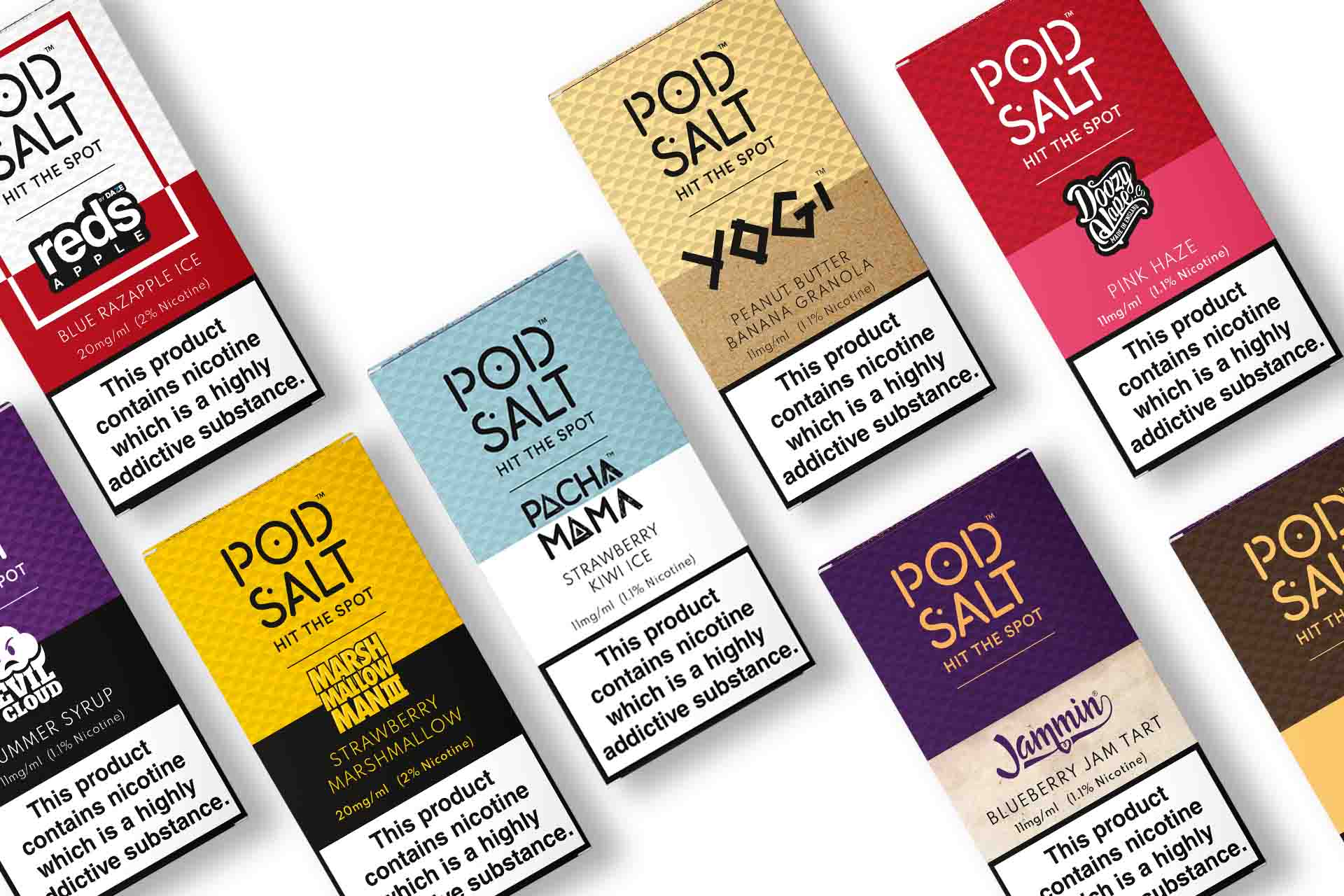
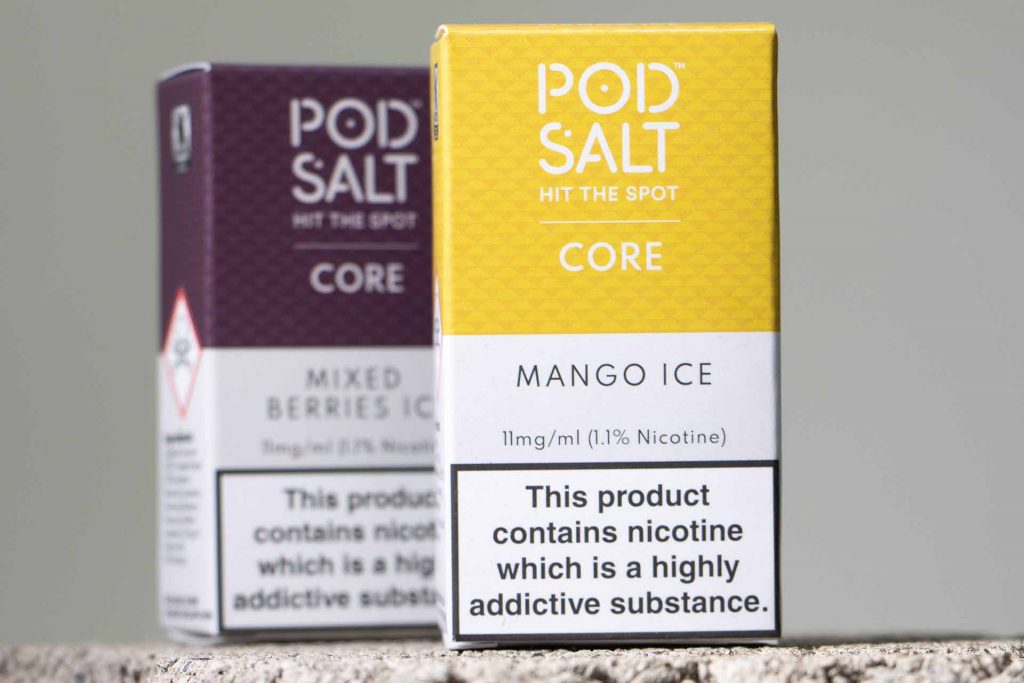
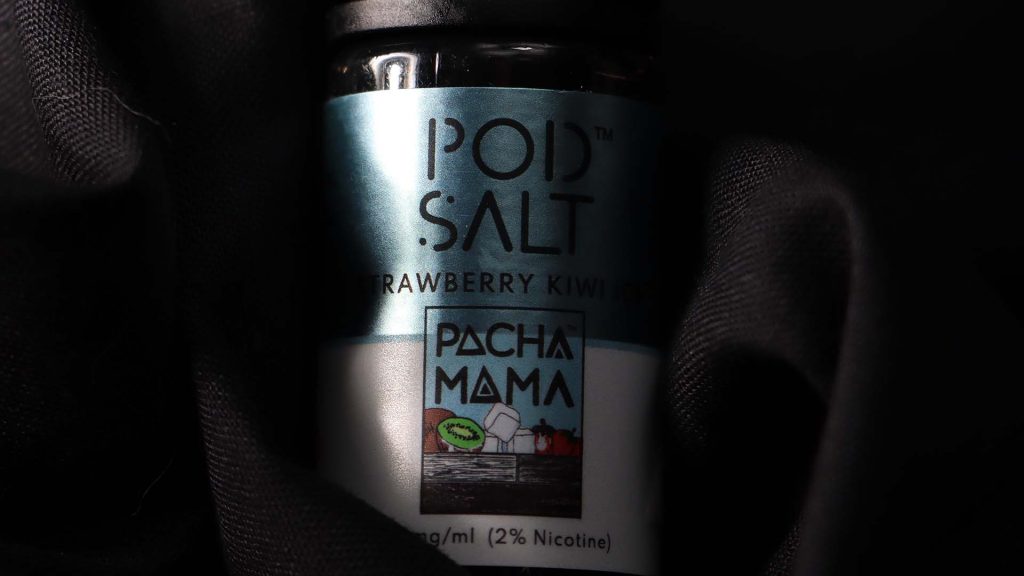
Rather than a frenzied jumble of colour, strategic use of a bold, primary colour or a sophisticated palette can enhance brand recognition. Brands like Pod Salt have embraced this trend by using subtle patterns with high-contrast colours to deliver a visual punch that stays with the consumer long after the purchase.

7. Storytelling Packaging

Beyond the Product

Vape packaging is not just a means to an end; it’s a storytelling tool. In 2024, brands that weave a compelling narrative into their packaging will win the hearts of consumers. Whether it's the origin of the product, the ethos of the company, or the aspirations of the vaper, the story told through the packaging adds a personal touch that connects on a deeper level.

8. Tactical Textures

The Touch is Important

Tactile engagement with packaging can enhance the user experience and leave a lasting impression on vapers. Textured surfaces, patterned finishes, and even raised elements that vapers can feel make for a package that’s not only visually pleasing but engaging on multiple sensory levels.

In summary, the packaging landscape in the vaping industry in 2024 is advancing towards sustainability, interactivity, and a more thoughtful, inclusive approach to design. As we move through the year, these trends will continue to shape the market, showing us that packaging is not just a necessary container but a canvas for creativity and innovation.

Supply Chain Management with Xyfil – Benefits and Best Practices

Supply chain management (SCM) is a set of strategies and processes that are used to coordinate the flow of goods, services, and information between suppliers, manufacturers, distributors, and customers. It includes managing materials and inventory, setting up production schedules, coordinating logistics and distribution channels, tracking shipments, ensuring customer satisfaction, and controlling costs.

E-Liquid manufacture involves the production of vaporizer consumable liquids, such as e-juice and vape oils. The manufacturing process requires a complex supply chain to ensure that all necessary ingredients are sourced from reliable suppliers and delivered on time to be used in production. Proper supply chain management can help minimize costs associated with wasted materials and lost productivity, as well as ensure that customers receive quality products when they are promised. With the right strategies in place, E-Liquid companies can keep up with the growing demand for their products while maintaining quality and cost-effectiveness.

Benefits of Implementing Supply Chain Management

The benefits of using Xyfil's SCM services for E-Liquid brands are numerous. By streamlining production and inventory processes, companies can reduce the time and cost associated with having to source new or duplicate products when stock is low. Furthermore, supply chain management helps improve the quality control process by ensuring that all ingredients used in production are up to regulations and quality standards.

When you work with Xyfil you know that you are getting high-quality products and services thanks to our ISO and GMP certifications. Not only do we create robust products, but our robust services mean that we deliver high quality each and every time.

Additionally, efficient SCM practices allow companies to be more flexible and responsive by quickly adapting to changes in demand. Finally, SCM helps E-Liquid brands keep up with growing customer demand for their products by ensuring that all necessary ingredients and materials are on hand when needed, thus resulting in timely deliveries.

Best Practices for Developing an Effective E-Liquid Supply Chain

Xyfil offers a comprehensive set of services to help E-Liquid brands develop an effective supply chain. We strive to provide our partners with the tools and resources they need to succeed in today's competitive market.

To start, we recommend automating inventory management processes as much as possible. This will help reduce wasted time and energy, as well as minimize potential errors. Additionally, Xyfil uses data analytics tools to track and analyse supply chain performance so that we can identify areas for improvement. We also implement risk mitigation strategies to reduce the likelihood of disruptions in production or delivery.

Finally, we strive to streamline logistics and distribution processes. For example, our warehousing and fulfilment services can help reduce transportation costs by consolidating orders into larger shipments. By delivering to your B2C customers we can help keep your costs, space, time and management low so you can focus on your next big product launch.

By leveraging Xyfil's experience in supply chain management, E-Liquid brands can feel confident that their products are being manufactured, produced and delivered on time, ensuring customer satisfaction and staying competitive in the market. With Xyfil's effective supply chain services, E-Liquid brands can optimize their operations and maximize their profits.

Xyfil delivers time and time again

E-Liquid brands can trust Xyfil to provide comprehensive and effective supply chain management solutions that meet their needs. Our services are designed to help companies streamline processes, reduce costs, improve quality control, and remain competitive in the market. We use data analytics and risk mitigation strategies to ensure that our customers are getting the highest quality products and services. By leveraging our expertise in SCM, E-Liquid brands can rest assured that our operations are running smoothly and efficiently.

Xyfil is here to help you exceed expectations and achieve success. Book a meeting with us today to get started.

Sustainable Vaping: Make the Switch to Eco-Friendly Products

As the vaping industry continues to grow, so does the potential for environmental waste and pollution. In order to cultivate a healthier planet and reduce our effect on the environment, vape manufacturers can help you take steps to make your products more eco-friendly. In this article, we'll discuss how vape manufacturers can help you switch to more sustainable products in order to produce environmentally friendly vape products.

The Problem with Disposables

A major issue with vape products is the amount of E-Waste they produce. Disposable vapes are often thrown away and not recycled, leading to a large influx of non-biodegradable materials in our landfills. Even worse, many of these disposable devices contain valuable metals and plastics that could be repurposed and recycled.

The other issue with disposables is that they're difficult to recycle. Many of the components inside these devices are not able to be separated and recycled. Vape brands should consider switching to more sustainable options that are easier to recycle and reuse. By switching to an eco-friendlier option, vape manufacturers can help your brand reduce its environmental impact.

Making the Change to Reusable Devices

For vape brands looking to reduce their eco-footprint, making the switch to reusable devices is a great option. There are several types of reusable devices on the market, from refillable pods and cartridges to larger tank systems. Refillable pod systems offer more flexibility with E-Liquid flavours and have become increasingly popular in recent years. Tank systems also offer a higher level of customization, allowing users to choose different types of coils and vape settings.

Developing a pod kit system is a great way of introducing your current disposable vape customers to the world of vaping. Offering a range of refillable pods with different nicotine strengths is an easy way to help them get started while encouraging them to switch from disposables to reusable devices.

E-Liquid - the sustainable vaping option

For vape brands, investing in turning your disposable vapes into E-Liquid - currently known as Bar Salts - is another way that you can reduce your environmental footprint. Bottles of E-Liquid last longer than disposable devices and can be packaged in recyclable bottles. By switching to E-Liquids rather than disposable devices, brands can reduce their E-Waste from single-use lithium batteries and plastics that would otherwise end up in landfills.

Additionally, vape brands can look into using recycled materials for their boxes - this not only helps reduce waste but gives your products an eco-friendly feel.

Perhaps consider reducing any unnecessary packaging and going for a more minimalist look. Where applicable, it is possible to apply peel-and-reveal labels to bottles, removing the need for boxes.

Establishing your sustainable vape brand

Vape brands should consider creating eco-friendly and sustainable vape products in order to reduce their environmental footprint. Not only can this help you create a healthier planet, but it also gives your brand an eco-friendly reputation. Investing in refillable pods, tank systems and recyclable E-liquid bottles are all great ways to reduce waste and help your brand become more sustainable.

At Xyfil, we are a vape manufacturer with the tools to help create sustainable vape products for your brand. Our team of specialists can provide advice on the best options for your brand, from E-liquid development for pod kits to producing E-Liquid bottles and Bar Salts. We are actively looking towards the latest developments and updates in manufacturing, to help create a sustainable way to manufacture whilst being as eco-friendly as possible. With our help, you can make sure that your products are sustainable, high quality and compliant.

An Inside Look at the Top 8 E-Liquid Packaging Design Trends for 2023

The vaping industry is always innovating and creating unique experiences, from the product to the packaging. Keeping up with new trends in design can be a challenge for companies in this ever-evolving market. To help you stay up-to-date and impress your customers, we’ve looked into what’s going on within the vaping industry and compiled a list of the top 10 E-Liquid packaging design trends for 2023 that you should consider.

Top 8 Vaping Packaging Design Trends for 2023

1. Sleek Minimalism: Simplicity is key for minimalistic designs as they strive to create an impactful, yet uncomplicated visual experience. This trend promotes an uncluttered look with plenty of negative space and sleek, clean lines. The minimalism approach is all about making an impression with subtlety and sophistication.

2. Bold Branding and Typography: Brands are tapping into their creative sides to create unique typography and logo designs for their packaging. This trend encourages companies to use bold fonts that truly reflect their brand identity, as well as eye-catching colours and patterns to help their products stand out on the shelves.

3. Unique & Eye-Catching Shapes: To capture consumer attention, brands are utilizing unique shapes for their packaging. From square containers to triangular boxes and beyond, these designs offer an exciting way to display your product in a captivating manner.

4. Colourful Patterns and Textures: Eye-catching colours and textures can help brands create a unique visual experience for customers. This trend encourages companies to utilize patterns, illustrations, raised printing, and other elements that help their product stand out from the competition.

5. Nature-Inspired Designs: Packaging designs are embracing the natural world, with designs that capture the beauty of nature through vibrant colours and detailed illustrations. From plant-focused patterns to animal or insect themes, this trend encourages companies to draw inspiration from the outdoors and create unique packaging experiences.

6. Customizable Features: To help customers stand out in a crowded space, brands are using customizable features to make their products more unique. From adding personalized text and logos to creating custom-shaped containers, this trend encourages companies to get creative with their packaging designs.

7. Industrial Aesthetics: Companies are looking for ways to capture the attention of tech-savvy customers by embracing industrial aesthetics in their packaging designs. This trend encourages brands to use metallic colours and geometric shapes to give their product a modern and stylish look.

8. Retro Influences: This trend involves bringing back old-school designs from the past with a modern twist, such as classic fonts, vintage illustrations, and muted colour palettes that capture a nostalgic feeling for customers. These designs can help brands stand out in a competitive market and tap into the nostalgia factor.

Custom Packaging Solutions

Custom packaging solutions are becoming more popular in the vaping industry, as companies look for ways to create a unique experience for their customers. From custom shapes and sizes to personalized printing options, this trend encourages businesses to think outside of the box when it comes to their packaging designs. Companies can utilize custom foam inserts, windows or labels that feature their logo or brand colours, helping them stand out from the competition.

Additionally, companies can choose from a variety of finishes for their product that creates a completely different look depending on the chosen finish. This could be satin or gloss, spot UV or embossed, or even uncoated which can make for a more natural finish. With custom packaging solutions, companies can create a unique and branded experience for their customers.

Sustainable Packaging Solutions

Sustainable packaging is becoming an increasingly popular trend in the vaping industry as companies look for ways to reduce their environmental impact. This involves using materials that are recyclable, biodegradable, or compostable. For example, some companies are using paper-based packaging with vegetable dyes and recycled content that is easy to recycle and reuse. Additionally, some companies are moving towards removing packaging entirely and having all the necessary information on the product solely. Sustainable packaging solutions help brands become more eco-friendly while also giving them a competitive edge in the market.

In conclusion

As the vaping industry continues to grow, so do the packaging design trends. These trends are helping companies stand out from their competition and create a unique experience for customers. From colourful patterns and textures to customizable features and sustainable solutions, there is no shortage of ways brands can differentiate themselves in 2023. Utilizing any of these packaging design trends is sure to help companies gain a competitive advantage in the vaping industry.

Whether you're looking to rebrand, have a new product range ready to hit the shelves, or are dreaming up your next big product, Xyfil can help. Our team of expert designers have the experience necessary to bring your ideas to life. With experience taking hundreds of vape and CBD brands to market around the globe, Xyfil guarantees quality and results.

Contact us today for more information on how we can help you.

Top Colour Trends for Packaging Designs in 2023

As we delve into 2023, E-liquid and vape brands should pay close attention to colour trends in packaging design. Colour has a direct effect on customers' emotions and helps indicate the flavour of E-Liquids. In this blog post, we'll explore the top colour trends for E-Liquid packaging designs that you should be aware of in 2023. From subtle tones to earthy hues, these top colour trends will help guide your designs for unique packaging that stands out from the competition. Keep reading to learn more!

5 colourways to make use of in 2023

1. Earthy Hues

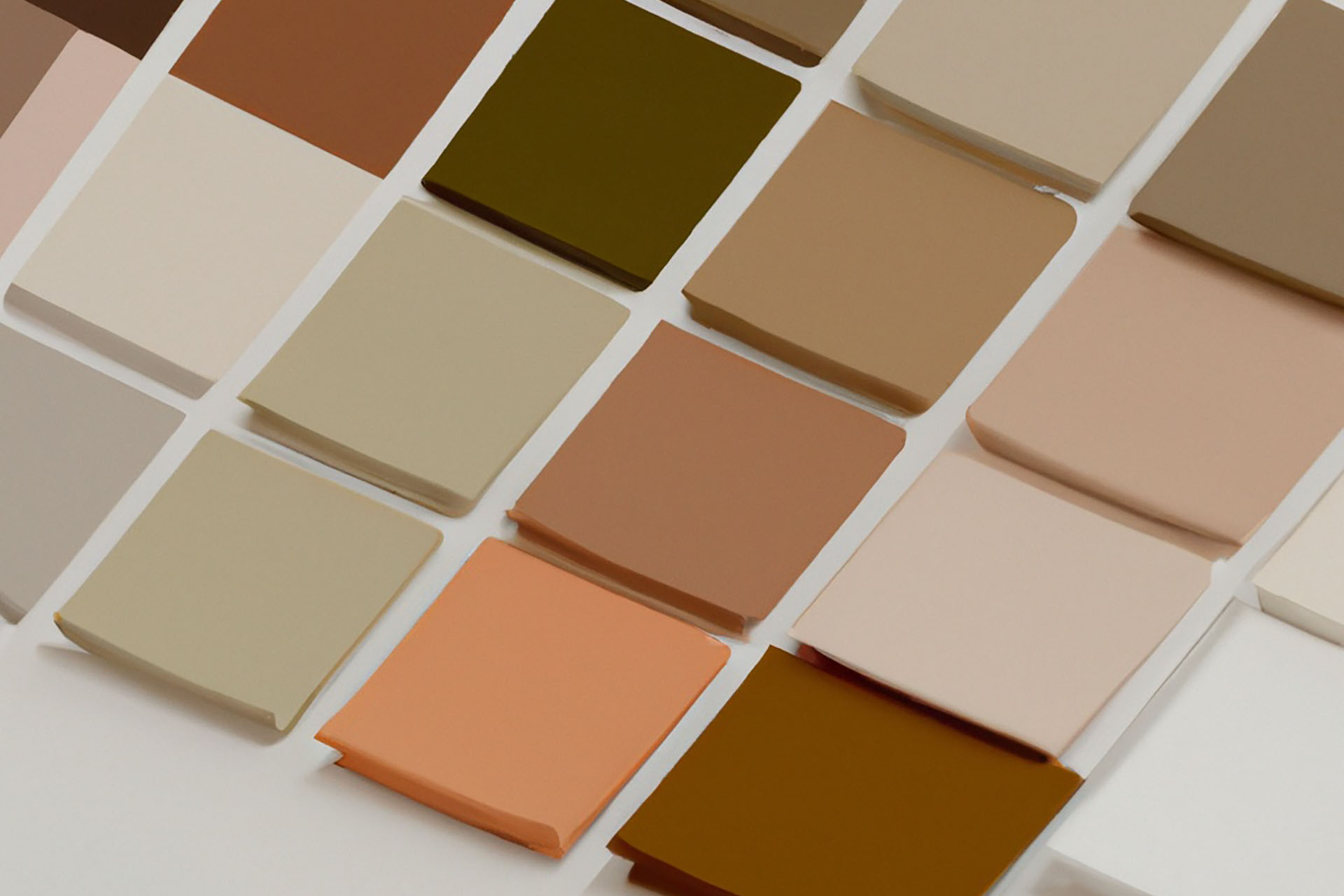
Earthy hues are becoming increasingly popular for packaging in 2023. Think about shades like terracotta, camel, and olive green. These shades bring a sense of organic elegance to any design and can be used to create calming or luxurious vibes depending on the pairing of other colours.

2. Muted Shades

Muted shades have been gaining popularity in recent years and will continue to trend in 2023. This includes subtle pastels such as pale blue, lavender, and peach; as well as muted versions of more vibrant colours such as navy blue, dusty pink, and charcoal grey. Muted shades provide a sophisticated look while still allowing a product’s label to stand out from the crowd on store shelves.

3. Metallics

Metallic shades are still a popular choice for packaging designs, as they can add an upscale touch without being too flashy. Examples of metallic colours include silver, gold, bronze, and copper. These hues work well when contrasted against earthy or muted tones to create a balanced and modern look.

4. Charcoal

Charcoal is becoming increasingly popular in the world of packaging design due to its classic yet sophisticated aesthetic. It’s a great option if you want to add a touch of sophistication to your product’s label without straying too far from traditional colour palettes. Plus, charcoal looks great with almost any other colour!

5. Bright Neutrals

Neutral shades such as tan, beige, and light grey are often overlooked when it comes to packaging design. However, they can make great choices in certain contexts! In 2023, bright neutrals will be trending – think shades like sage green, pale yellow, and sky blue. These colours will lend a modern yet subtle feel to any product’s label.

Bonus: Pantone Colours

Pantone's colour of the year for 2023 is Viva Magenta, a deep and nuanced red-purple hue that balances warm and cool tones. This hybrid colour is sure to be popular on packaging designs in the year ahead, as it can add a rich, complex feel to any product’s label. Additionally, Viva Magenta works well when paired with many of the other colour trends mentioned above – so don’t be afraid to experiment!

Overall, the colour trends for packaging in 2023 will be all about balancing earthy hues with muted shades or metallics for a sophisticated look. Bright neutrals are also finding their way into more designs as well! Whether you’re creating packaging for a new product or updating an existing label – these colour trends should give you plenty of inspiration.

Designing your vape product packaging with Xyfil

As a leading E-Liquid manufacturer in the UK, Xyfil strives to help brands create stand-out vape products in a highly competitive market. Our team of experts, from the flavour & product development to the creative studio, will help you create vape packaging designs that stand out, from concept creation to full-scale production. With Xyfil you can choose bespoke or industry-standard packaging - work with us today to get your brand on-trend.

Get to grips with product design with our previous article, with tips on how to make your E-Liquid brand stand out from the crowd.

Get in touch today to find out more.

Important Points for Making Your Product Designs Better

You’ve settled on your flavours and even possibly produced your batches of E-liquid already. But have you thought about the packaging? Sometimes the design of a product gets left until last resulting in hurriedly designed packaging and labels that can feel subpar in comparison to market leaders. But is it important to make sure your products have the best packaging and design?

Countless studies have shown that packaging has a superior influence on consumers, and can make a difference in acquiring and retaining customers for new products. Are your products receiving the attention they deserve? Here are our top tips for making sure that your product packaging is attractive and brings in the right attention.

Define your target audience

The first and most important step you should think about is your target audience. Who is your product for?

When it comes to vape products and E-Liquids, it's vitally important to make sure that your products are not targeted at younger audiences. One stigma that refuses to budge for vaping products is the claim that they are targeted toward underage audiences who shouldn’t be vaping. And it is safe to say there are some brands whose designs do lean towards those who are perhaps younger than 18. Making sure your products are not targeted toward younger audiences should be a priority.

Age isn’t just the only type of audience you should cater for; in fact, it can be more to do with the types of people and interests of potential consumers. For example, if you want to cater more towards the sort of vaper who enjoy parties, your design will be very different than if you were targeting vapers who enjoy chic and vintage products. Defining who you want to target will drive your design from the very start.

Using influences from other industries

Researching and referencing existing designs is a common practice by many industries and designers. Taking ideas from existing designs, and improving or tweaking them to create something new, is a great way to create attractive packaging that catches the eye. That’s not to say you should copy other designs, in fact, all this can do is potentially harm your own products which could be unfairly labelled as a lesser comparison. It’s important to understand influence as inspiration and not as a copy and paste. There are a lot of great designs already on the market but there will always be gaps between them that allow for new designs to rise alongside, and even overtake them.

Similarly, the vaping industry has a habit of falling into the stereotypes of ‘vaping design’. By using the same imagery and styles used by other typical vape brands may help your product become more easily recognisable for what it is but doesn’t help it stand out from a crowd. These sorts of designs also run the risk of appearing as child-appealing or cheap looking.

Instead, you can try using influences from other industries to create new, innovative designs for vape products. These could be designs for alcohol, beauty, food, travel and more. Many of these boast designs that don’t necessarily reflect their product literally, but the type of product/meaning consumers pay attention to. Some of the best designs for product packaging and logos are often simple, reflective of the brand and hold meaning.

Don’t be afraid to make something simple

Minimalism is a powerful way to make your brand stand apart from the rest. Especially in the vaping industry where designs can easily become overwhelmed with patterns, colours and graphics that swamp a product’s design. These may seem eye-catching but can often be too much to look at or vital information like flavour, brand name etc, can get lost.

With a minimal design it is much easier to single out important information, and especially clean designs that highlight a single focus, are much more eye-catching and can create a natural curiosity with a consumer. It should be enough to note that popular brands in a variety of industries are all looking at ways to make their logos more minimal. See for example the changes in designs from Amazon, Facebook, Starbucks, and Pringles to name a few.

Although many of these have stemmed from their brand awareness peaking, allowing them to simplify their designs, many are also aware that simple and minimal designs are much more digestible and memorable for consumers. A good practice would be to show someone your logo design and if, after a short period of time, they are able to recall your design quite clearly or at least the keynotes of it, then it’s a good logo design.

This also stems from the product labels and packaging. Overwhelming the vital product information with in-your-face graphics, patterns and colours can be a turn-off for many consumers. Your core product message can also get lost amid the graphical chaos. Simplicity doesn’t have to mean adding a logo and product information to a white background and calling it there (although this could be quite effective depending on the branding and logo). It means choosing what you want customers to know about your product and the first thing you want them to see that would draw them to your product.

Function vs form

It’s very important to understand the form and function of your product when designing packaging and labels. The form stands for the overall look and feel of the design from its font, graphical elements, texture and colour. The function is the practical element of the design that suits the purpose of the product. Form without function is merely pretty packaging, and function without form can’t achieve its goal. Establishing the purpose of your product, whether it be to offer impressive flavours, help smokers quit, or work best for sub-ohm vaping, will help lead your product designs form.

Considering finishing from the outset (what finishes you want)

Naturally most think of finishes as being the tail-end of the design process but in actual fact, it’s worth deciding on the finish of your product packaging from the beginning. Deciding on this can impact the actual design of your packaging and can make the finish feel more organic, rather than some fancy foiling tacked on at the end.

Exploring new finishes is also a great way of helping make your product stand out from the crowd. There is a wide variety of finishes from glossy to matt lamination, to soft-touch, textured and metalised foil, to UV varnish and even unique ones such as glow-in-the-dark lacquer ad thermal lacquer. Some of these may not suit the product type but introducing something different and unique looks more interesting than simple silver or gold foil.

Listen to your designers

Probably the most important aspect of the design process is to listen to your designers. Often it can be easy to have a picture in mind of how you think it should look, but rarely does the images in our mind translate well to reality. Designers are tasked with this venture and use their experience and expertise to try and translate your ideas to reality. Sometimes this may not match exactly with your original concept, but more than often these changes are purposeful. Make sure to communicate with your designers and listen to their reasoning behind the changes. The answers may surprise you!

Hopefully, this provides you with some food for thought on your next product launch, or perhaps if you’re thinking of refreshing your current product offers with new artwork. Whatever it is, Xyfil can help with our dedicated Studio team who have years of experience in helping brands develop their logos, labelling and packaging. Many award-winning brands have benefitted from our expertise, and you can too. Contact us to find out how we can help you.