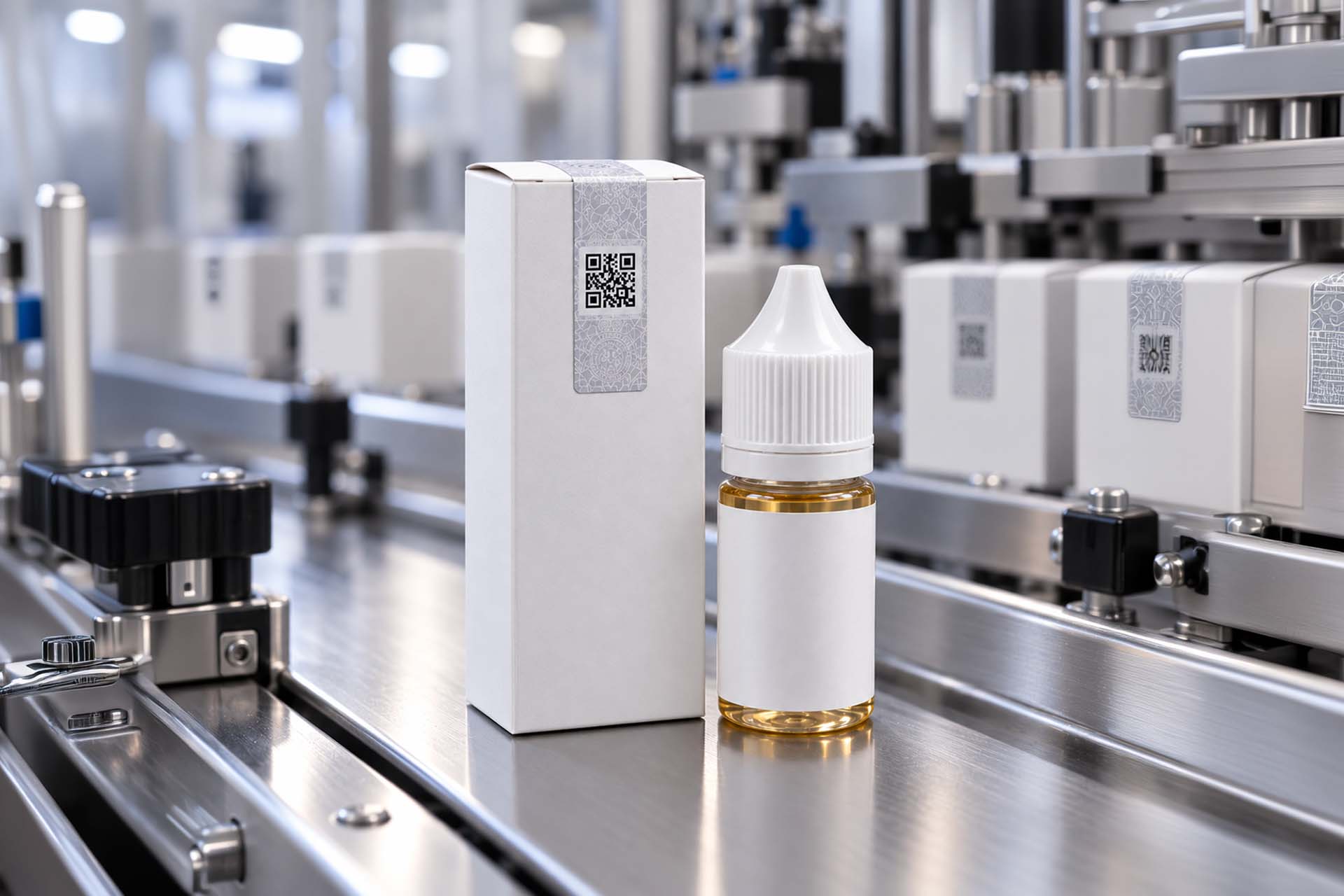
From January 1st, 2027, only digital duty stamps can go on vaping products in the UK. Transitional stamps had a short life by design, and their window is now closing. For brand owners, that makes the next few weeks a useful checkpoint. If your manufacturer applies your stamps, the switch happens on their line and under their approvals. So it's worth asking a few clear questions now, while there's plenty of time to act on the answers.
This guide gives you seven of them. Each one comes with a note on what a good answer sounds like. You can use them with your current manufacturer, or with any partner you're considering.
Key takeaways
- From January 1st, 2027, only digital duty stamps can be affixed. You can buy transitional stamps until November 30th and affix them until December 31st, 2026, according to HMRC's key dates.
- Whoever applies a digital stamp must activate it at that moment. After that, operators scan it at set points.
- Your manufacturer's approvals, data handling and stamp controls now shape how smoothly your stock reaches the shelf.
- Seven simple questions show whether your set-up is ready for the switch.
Why the switch to digital duty stamps is a good moment to check in
Since Vaping Products Duty went live on October 1st, every new duty-liable product released for UK sale has needed a stamp. Until now, many brands have used transitional stamps. These carry physical security features only, so nobody scans them.
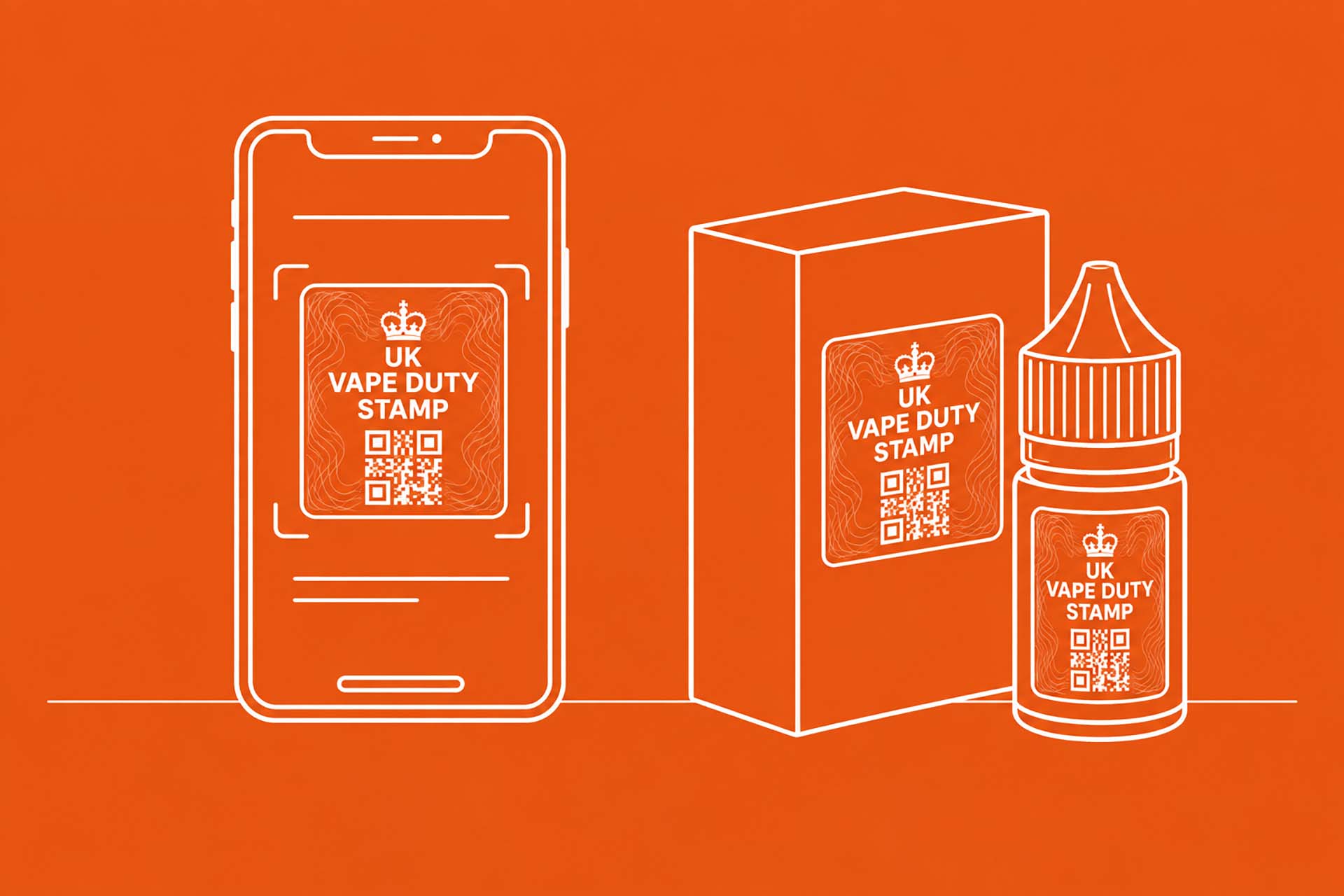
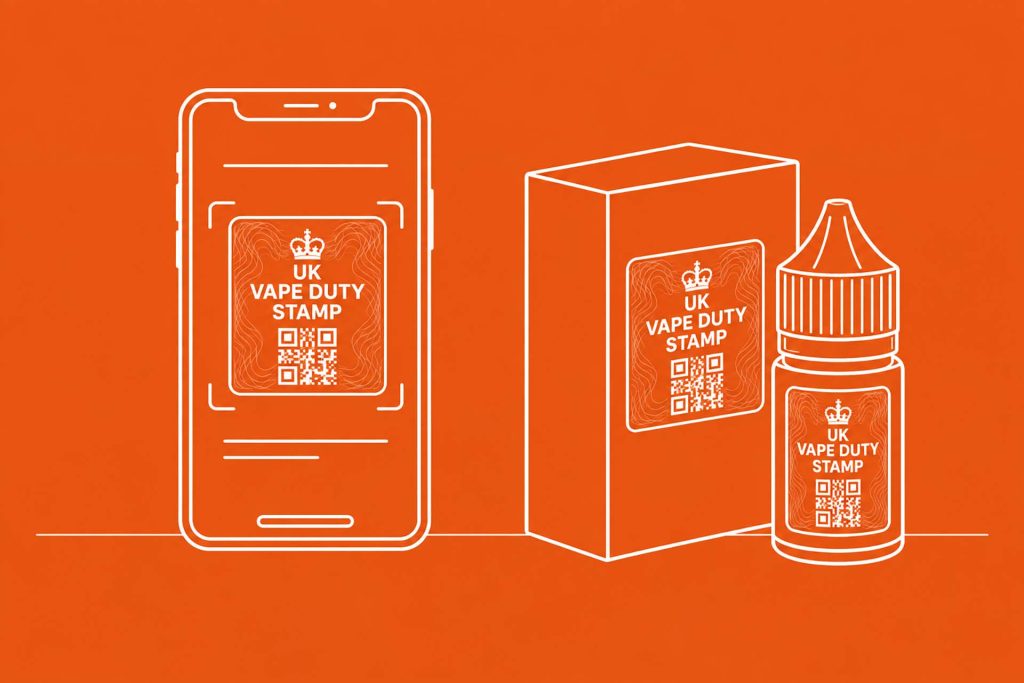
Digital stamps add a scannable code. Whoever applies the stamp must activate it at the point of affixing and record data about the product. After that, operators scan it again at set points, including release for consumption, as HMRC's stamp guidance sets out.
In short, more of the work now sits with whoever affixes your stamps. That's good news if you have a well-prepared partner, because the extra steps happen out of sight. It also means a quick conversation now can save a scramble in January. Our guide to digital vs transitional vape duty stamps covers the mechanics in full. Here, we focus on the questions.
Seven questions to ask your manufacturer about digital duty stamps
1. Which approvals do you hold, and which ones cover stamping?
Only HMRC-approved purchasing operators can buy duty stamps. That means UK manufacturers, warehousekeepers and UK representatives. They order through the appointed supplier's secure platform.
So start with the basics. Ask which approvals your manufacturer holds, and whether they include stamp affixing at their own site.
A good answer: a clear list of approvals, plus a plain explanation of who buys, holds and applies your stamps.
2. Are you already applying digital stamps?
Digital stamps have been on sale since September 1st, 2026. Some operators started with them straight away, while others used transitional stamps first. Either approach works until December 31st.
From January 1st, however, every stamp needs activating as it goes on. Each activation records details such as the time, date and address of affixing, the operator and the product. Ask whether your manufacturer has already run digital stamps through its line, or when it plans to start.
A good answer: a firm start date, and a trial run before your first January batch.
3. How will you set up my product data?
Every SKU needs a record in the stamp supplier's system before its stamps can go live. HMRC's guidance lists ten fields. They include the GTIN barcode, volume to the nearest 0.1ml, brand, flavour, product type and nicotine content. Nicotine products also need their ECID or GBID.
Ask who builds these records, and what they need from you. When a brand moves its production to us, product data is one of the first things we look at. Every stamp depends on it, so getting it right early keeps the first run on schedule.
A good answer: a simple template, one point of contact and a check before the first run.
4. Who generates aggregation codes, and how do you record sales?
Digital stamps link to higher-level packaging through aggregation codes. These connect each stamped unit to its carton, master case and pallet. Either the manufacturer or the importer can generate them. Operators then report each link through an API built on the GS1 EPCIS standard.
There's a useful shortcut here too. At the final exit-to-market scan, an operator can declare a sale event for an aggregate code. That status then applies to every code linked beneath it, so nobody needs to scan each unit one by one.
A good answer: a named owner for aggregation, and a process that records cases and pallets rather than single units wherever it can.
5. Where do you hold my stamps, and how do you reconcile them?
HMRC expects operators to keep stamps in secure storage with access controls. It also expects routine reconciliations of stamps ordered, received, used, returned and destroyed. On top of that, operators need incident processes for loss, theft, damage and discrepancies.
Digital stamps add one more date to track. Operators must activate stamps within 12 months of receiving them, or a penalty may apply.
A good answer: stamps held securely in the UK, a reconciliation after every run, and records you can see on request.
6. What happens to any transitional stamps left after December 31st?
Transitional stamps can't go on after December 31st, 2026. So it's worth asking whether your manufacturer expects any to be left over, and what it plans to do with them.
Destroying unused stamps also follows a set process. Operators must tell HMRC the method, time, date and location before they destroy any stamps.
A good answer: an ordering plan that keeps leftovers low, and a clear process for any that remain.
7. Does your stamp purchase limit cover my volumes?
HMRC sets each operator a purchase limit over a rolling three-month period. Operators may go over it by up to 30%. They can also ask for a rise if they show a business need.
So if you plan to grow, launch new flavours or move more production across, share your forecast early. Our duty stamp timeline shows how far ahead each step needs to start.
A good answer: confirmation that your volumes fit, plus a plan for busy months.
What good answers have in common
Look back over the answers, and a pattern usually appears. Strong partners answer quickly and specifically. They name who does each step. They show you records instead of describing them. And they treat your forecast and product data as shared work, with clear deadlines on both sides.
If a few answers feel vague, that's fine. It simply shows you where to ask a follow-up question before January. For a wider view of the partnership, see our five signs your manufacturer may be holding your brand back.
How Xyfil answers these questions
We've manufactured e-liquid in Preston since 2014. Our VPD approvals cover production, import, warehousing, duty stamp affixing and UK duty representation. As a result, buying, holding and applying your stamps all happen within one approved business.
We apply both transitional and digital duty stamps today, so you can move to digital whenever it suits your range before January 1st. We've built the stamp workflow into how we plan every production run. Your stamps stay in our secure UK custody, and every run closes with a reconciliation pack. Each stamp then ties back to its HMRC dataset and a GS1-aggregated batch record.
We can also take on your packaging artwork, so the stamp has a clear home on your pack from the first print. For artwork questions, our guide to designing packaging for stamp integrity is a good next read. And if you import, our comparison of stamping and fulfilment routes shows how each route handles the move to digital.
Digital duty stamp FAQs
When do digital duty stamps become mandatory?
From January 1st, 2027, only digital duty stamps can be affixed to vaping products in the UK. Approved businesses can buy transitional stamps until November 30th, 2026 and affix them until December 31st, 2026. Digital stamps have been on sale since September 1st, 2026, so operators can switch sooner.
Do I need my own HMRC approval to use digital duty stamps?
Not if a partner applies them for you. Only HMRC-approved manufacturers, warehousekeepers and UK representatives can buy duty stamps. If your manufacturer holds stamp approvals, it buys, activates and applies the stamps on your behalf. You'll still need to supply accurate product data for each SKU.
What data does a digital duty stamp need?
Each SKU needs a record with ten fields. These include the product name, description, GTIN barcode, volume to the nearest 0.1ml, brand, flavour and product type. The record also covers nicotine content and a JPEG image. Products containing nicotine need their ECID or GBID notification number too.
Can retailers scan digital duty stamps yet?
HMRC says retailers and consumers will be able to scan digital stamps to check authenticity in due course. For now, approved operators scan them at affixing, during permitted duty-suspended movements and at release for consumption. Codes work with standard scanners, and phones can read them through an app.
Get your range ready for digital duty stamps
The move to digital stamps is a chance to tidy your product data and confirm your stamping set-up, well ahead of the new year. Send us your SKU list and a short note on how your range is made and stamped today. We'll show you how it moves onto digital stamps, and what we'd need from you to get started.'ll show you how it moves onto digital stamps, and what we'd need from you to get started.