
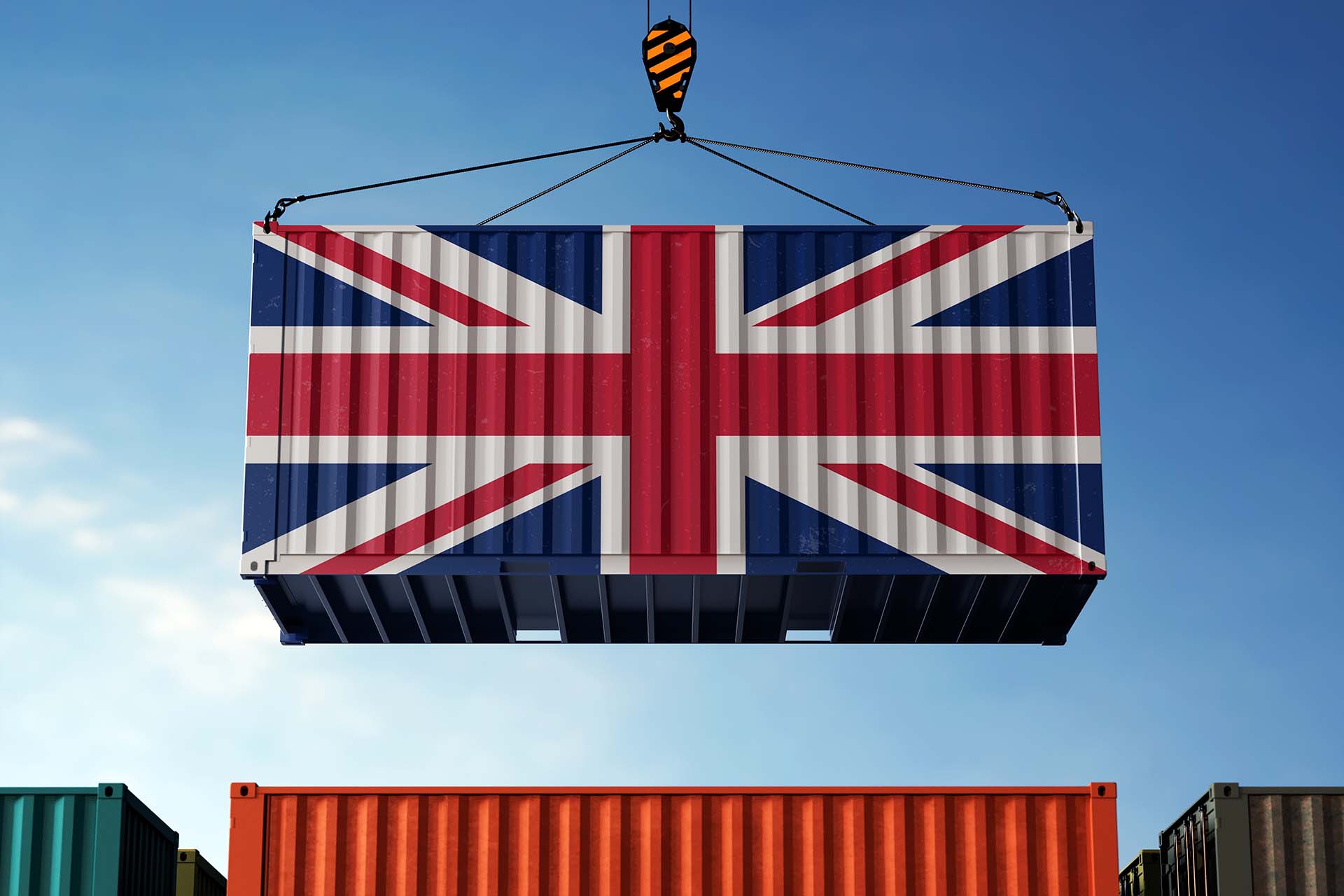
Vaping Products Duty went live on October 1st, 2026. If your brand makes its liquid overseas and you didn’t have a UK route in place by then, you may be wondering whether the door has closed. It hasn’t. Importing vaping products into the UK is still open to overseas brands today. What changed on October 1st is the route in. Every unit now needs a duty stamp before release, and someone in the UK has to hold the right HMRC approvals for it.
The good news is that you don’t have to build that set-up yourself. This guide explains what changed for imports, whether you need your own approval, and the three routes you can use to start shipping now.
Key takeaways
- The UK market is still open to overseas vape brands. Stock simply needs a valid duty stamp before it reaches UK customers.
- Overseas manufacturers don’t apply to HMRC themselves. Instead, an approved UK representative applies and buys stamps on their behalf.
- One approved UK representative can act for several overseas businesses under a single approval. That means you can work with one that already holds approval.
- You have three main routes: stamp at your own factory, stamp retail-ready stock in the UK, or import part-finished and finish here.
- New brands starting now should plan for digital duty stamps, because they become the only option from January 1st, 2027.
What changed for imports on October 1st
Three rules now shape every shipment you send to the UK.
First, duty applies at the border. HMRC’s import guidance says you must account for Vaping Products Duty at import, unless the goods go straight into duty suspension. Duty suspension simply means an approved site, such as an excise warehouse, holds the goods before duty falls due. The rate stays at £2.20 per 10ml, with or without nicotine.
Second, every unit needs a stamp before release. Products released for UK consumption from October 1st must carry a duty stamp. If you want to pay duty as your goods arrive, the stamps need to go on before they land.
Third, retail-ready goods have limited movement. Once products sit in their retail packaging, HMRC’s guidance allows only one move under duty suspension in most cases. For example, that could be one move from the port to a single approved warehouse.
Meanwhile, the grace period for older stock doesn’t help new arrivals. Eligible unstamped stock that entered the UK before October 1st can still sell until March 31st, 2027. However, anything you import from October 1st onwards needs to meet the stamp rules straight away.
Do you need your own HMRC approval to import vaping products?
In most cases, no. HMRC updated its approval guidance in April to confirm that overseas manufacturers don’t need to apply. Instead, their UK duty stamps representative applies, and that approval gives access to stamps.
This matters for timing. A brand-new application could take at least 45 working days to pass, and complex cases can take longer. Our guide to the 45-day approval bottleneck explains that process in full, while our guide to who needs HMRC approval for Vaping Products Duty covers each role in the supply chain.
However, you don’t have to start a new application at all. HMRC’s manual confirms that one UK representative can act for more than one overseas business under a single approval. In other words, you can join a representative that HMRC has already approved.
What a UK representative needs from you
For each overseas business it represents, the representative keeps three sets of records:
- Due diligence checks on your business.
- A business plan or sales forecast showing your yearly volumes. HMRC uses this to set a stamp threshold.
- A copy of the contract between you.
In our experience, brands that send a clear forecast early move through this stage fastest. A realistic forecast also helps your representative plan stamp orders around your launch.
What the representative takes on
The role carries real weight. In its consultation response, the government confirmed that the UK representative takes legal and financial responsibility for your stamps. As a result, the representative will want strong controls in place, and HMRC may ask for a financial guarantee. Our guide to lost and damaged vaping duty stamps explains how that liability works.

Three routes into the UK market now
Once you have a representative, the next choice is where your stamps go on. Each route suits a different supply chain.
Route 1: Stamp at your own factory through a UK representative
This route keeps everything at your overseas site. Your UK representative orders the stamps, and the appointed supplier sends them straight to your factory. Your team then applies them during production, before the goods ship.
It suits brands with steady volumes and a well-run factory. Bear in mind, though, that your factory takes on the stamping work. From January 1st, 2027, that includes activating and scanning every digital stamp as it goes on. On top of that, the stamps travel a long way before they reach a shelf.
Route 2: Ship retail-ready stock and stamp it in the UK
Here, your finished packs arrive unstamped and go straight into an approved UK warehouse under duty suspension. The warehouse then applies the stamps and releases the goods for sale.
This route works well if your packaging is final and you simply want a compliant stamp applied. Keep in mind that the move from port to warehouse uses up the single duty-suspended movement for retail-packed goods. After release to the market, duty falls due in full.
Route 3: Import part-finished and finish in the UK
This route gives you the most room to adjust. Your product arrives without its retail box, under duty suspension. A UK partner then completes the cartons, leaflets, stamping and sealing shortly before release.
Because the goods arrive part-finished, you keep an onward duty-suspended movement after finishing. You can also stamp on demand, in line with real orders. Duty still falls due in full at release, while the timing simply follows your sales. Plus, if part of a batch goes for export, it never needs a stamp destroying first. Our guide to importing part-finished and finishing in the UK covers this route in depth.
The three routes at a glance
| Stamp at your factory | Stamp retail-ready stock in the UK | Import part-finished, finish in the UK | |
| Where stamps go on | Your overseas factory | Approved UK warehouse | Approved UK facility |
| Who buys stamps | Your UK representative | The UK warehouse | The UK facility |
| Stamps in transit | Yes | No | No |
| When duty falls due | On arrival, unless held in suspension | On release from the warehouse | On release, after finishing |
| Onward duty-suspended movement | Not applicable | Used on arrival | Kept for later |
| Stamp on demand | No | Partly | Yes |
| Best for | Steady volumes, strong factory systems | Final packaging, simple ranges | Flexibility, new launches, mixed markets |
Timing your first shipment around the stamp dates
If you’re starting now, a few dates will shape your first order. Approved businesses can buy transitional stamps until November 30th, 2026 and affix them until December 31st, 2026. After that, from January 1st, 2027, only digital stamps can go on.
For most new brands, the simplest plan is to start on digital stamps. That way, you won’t hold transitional stamps that run out of time. Digital stamps also link to product data, and each SKU needs a record before its stamps go live. That record covers details such as the barcode, volume to the nearest 0.1ml, flavour and nicotine strength. Nicotine products also need their ECID or GBID notification number. Our digital duty stamp questions can help you prepare.
Finally, from April 1st, 2027, every vaping product outside duty suspension in the UK must carry a stamp. Starting now gives you a clean, stamped range well before then.
What to have ready before you ship
A little preparation makes the first shipment much smoother. Before you book freight, gather the following:
- A sales forecast by SKU for the next 12 months
- Product data for every SKU, including barcodes, volumes and notification numbers
- Your chosen route: factory stamping, UK stamping or UK finishing
- A signed agreement with your UK representative
- Packaging artwork with a clear space for the stamp
Once these are in place, your partner can plan stamp orders, book line time and set your release schedule.

How Xyfil helps overseas brands start now
Xyfil is HMRC approved for Vape Duty stamps. We hold producer, importer, warehousekeeper and duty stamp affixing approvals, together with UK duty representative status. We’ve also manufactured e-liquid in Preston for hundreds of UK brands since 2014. As a result, every route in this guide runs inside one approved business.
Here’s how each service fits:
- Import Representation. We act as your UK representative, covering scheme registration, stamp requisition, duty accounting and HMRC liaison.
- UK Stamping & Finishing. Your part-finished goods arrive under duty suspension, and we complete cartons, leaflets, stamping, sealing and casing.
- Duty Stamping Only. We stamp your retail-ready stock and release it to the UK market.
- Overseas Stamping under Bank Guarantee. Stamps reach your own factory, backed by a bank guarantee and strict reconciliation.
- Fulfilment & Storage. We hold stock under duty suspension and pick, pack and dispatch as orders come in.
When we stamp for you, your stamps stay in our secure UK custody. Each one ties back to its HMRC dataset, and GS1 aggregation codes link it to its carton, case and pallet. After every run, you also receive a reconciliation pack. You can compare every option in our stamping and fulfilment route comparison, or read how our excise warehouse handles imports.
Importing vaping products FAQs
Can I still import vaping products into the UK after October 1st, 2026?
Yes. The market remains open to overseas brands. Your products need a valid duty stamp before release for UK sale, and someone in the UK must hold the right HMRC approvals. Most overseas brands work through an approved UK representative or warehouse, which means they can start without an approval of their own.
Does an overseas manufacturer need HMRC approval?
No. HMRC’s guidance confirms that overseas manufacturers don’t need to apply. Instead, their UK duty stamps representative applies for approval and buys stamps on their behalf. The representative also takes legal and financial responsibility for those stamps, which is why it keeps due diligence records, a sales forecast and a contract for each business.
How long does it take to start importing through a UK representative?
That depends on your route and paperwork. A new HMRC application needs at least 45 working days. However, an existing representative can add your business under its current approval. In practice, your forecast, product data and stamp order then set the pace, and clear information from you speeds up every step.
Can I apply for temporary approval to start trading sooner?
Not as a new applicant. HMRC’s guidance mentions temporary approval only during a review or appeal, after HMRC has refused or cancelled an approval. For a brand starting out, the faster route is usually to work with a UK representative or warehouse that already holds approval.
Does using duty suspension reduce the duty I pay?
No. The rate stays at £2.20 per 10ml whichever route you choose. Duty suspension changes when duty falls due, because you pay as goods leave suspension for sale. That timing can help your cash flow, while the total amount of duty stays the same.
Start your UK route this month
October 1st has passed, yet your UK launch can still go ahead. With an approved partner, a clear forecast and the right route, your first stamped shipment can be on its way soon. Tell us where your stock is made and how it ships today, and we’ll map your quickest compliant route in. Get in touch with the Xyfil team to start the conversation.